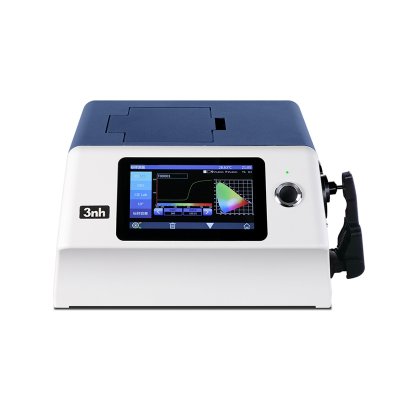
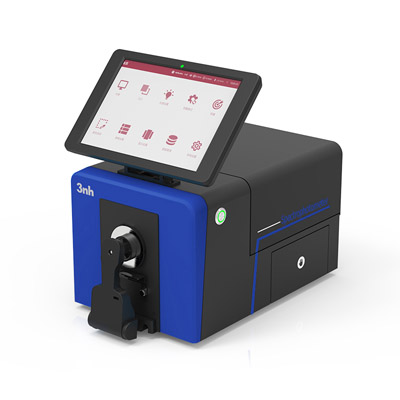
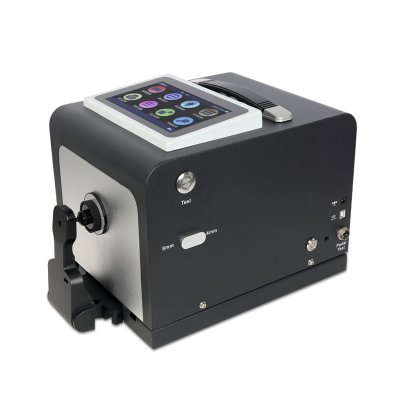
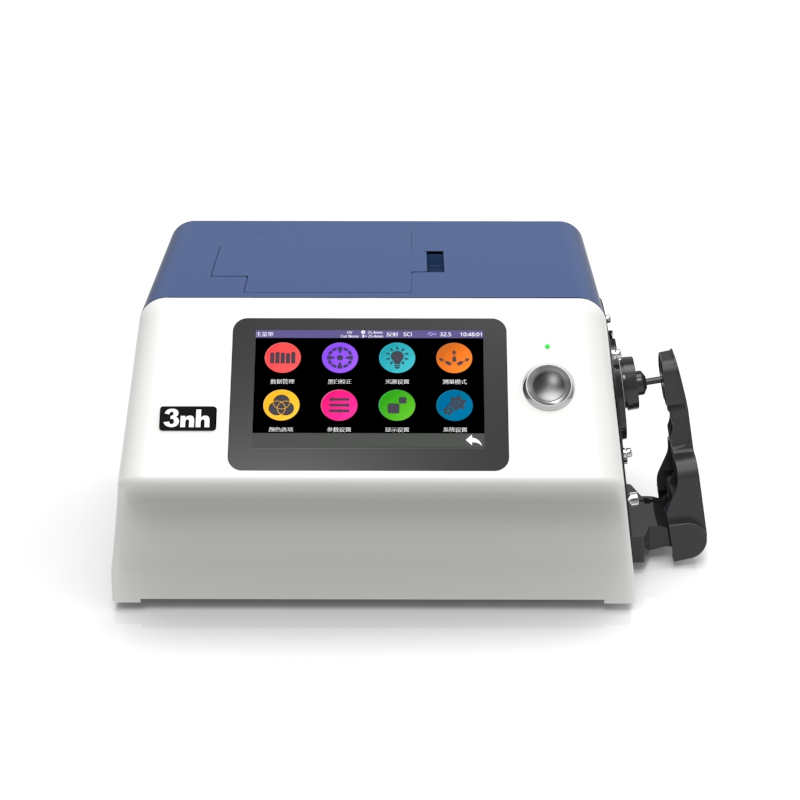
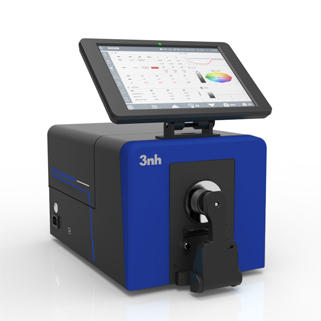
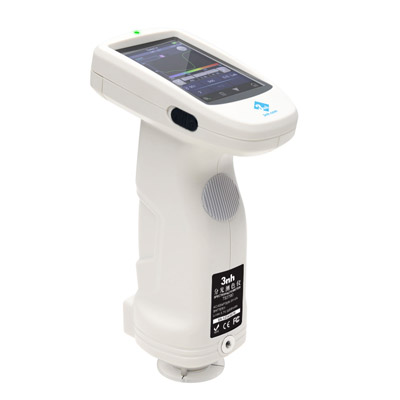
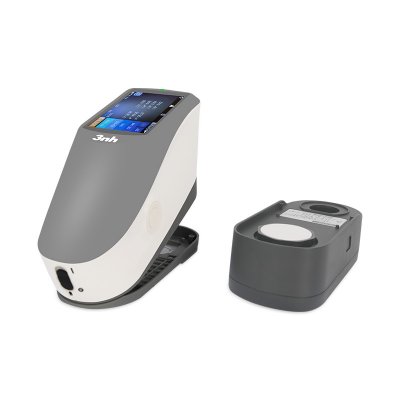
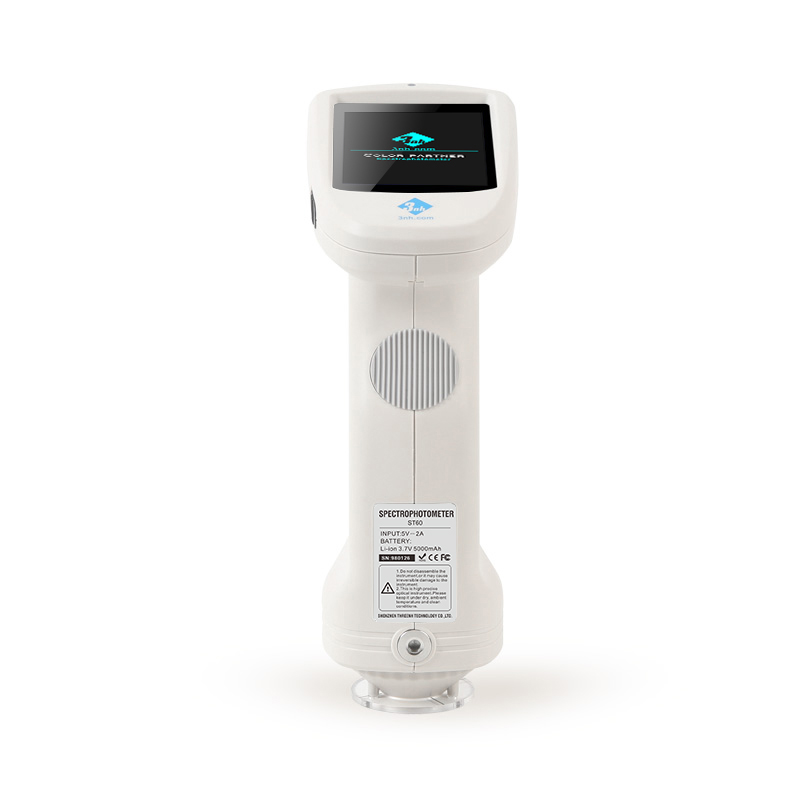
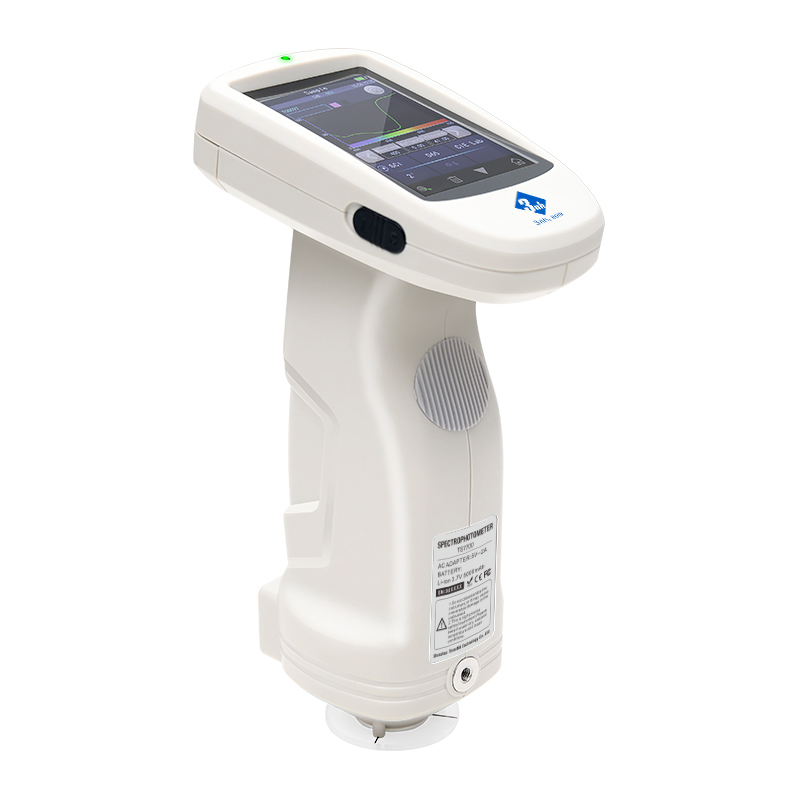
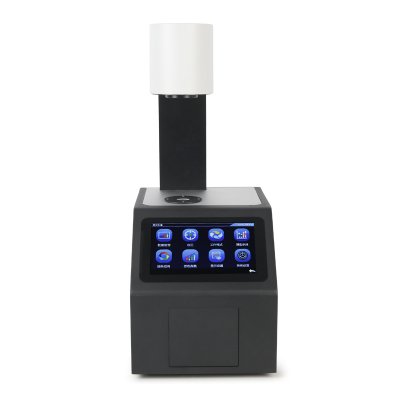
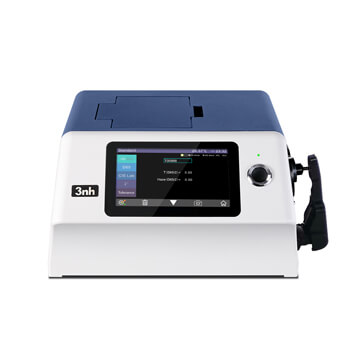
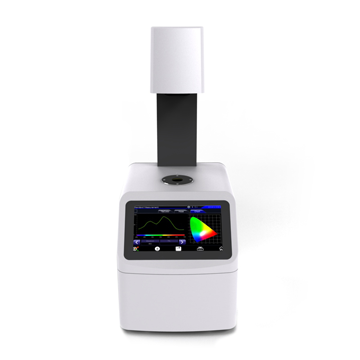
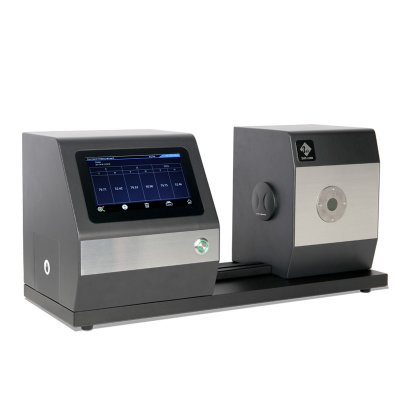
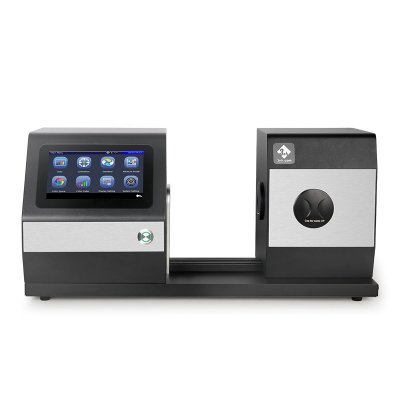
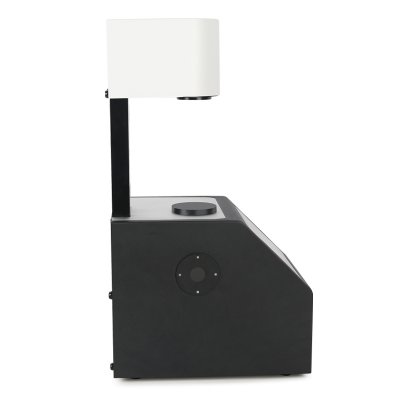
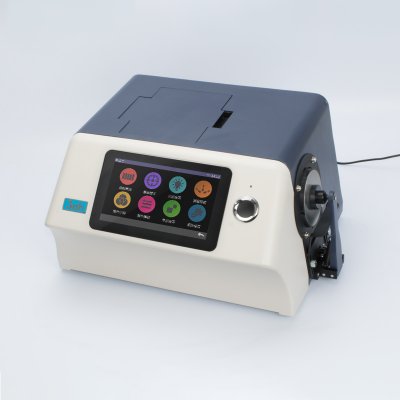
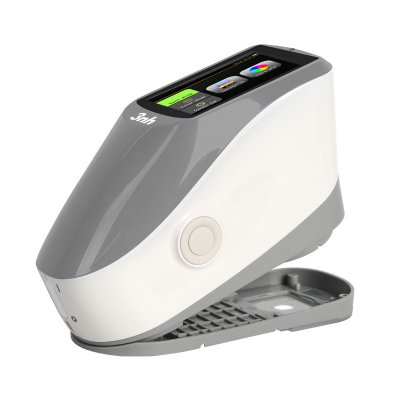
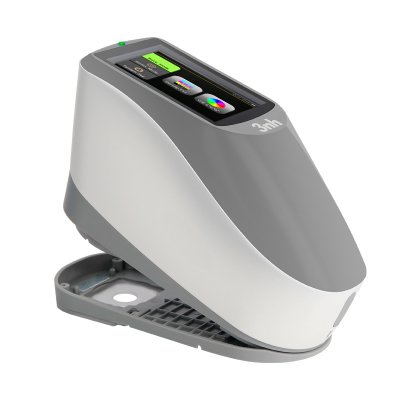
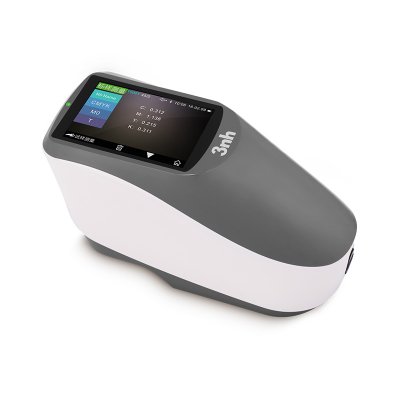
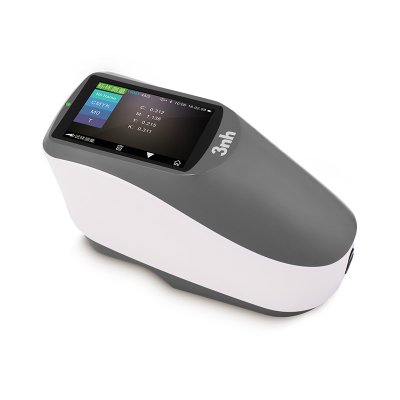
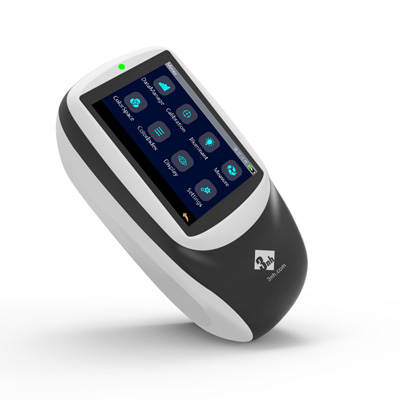
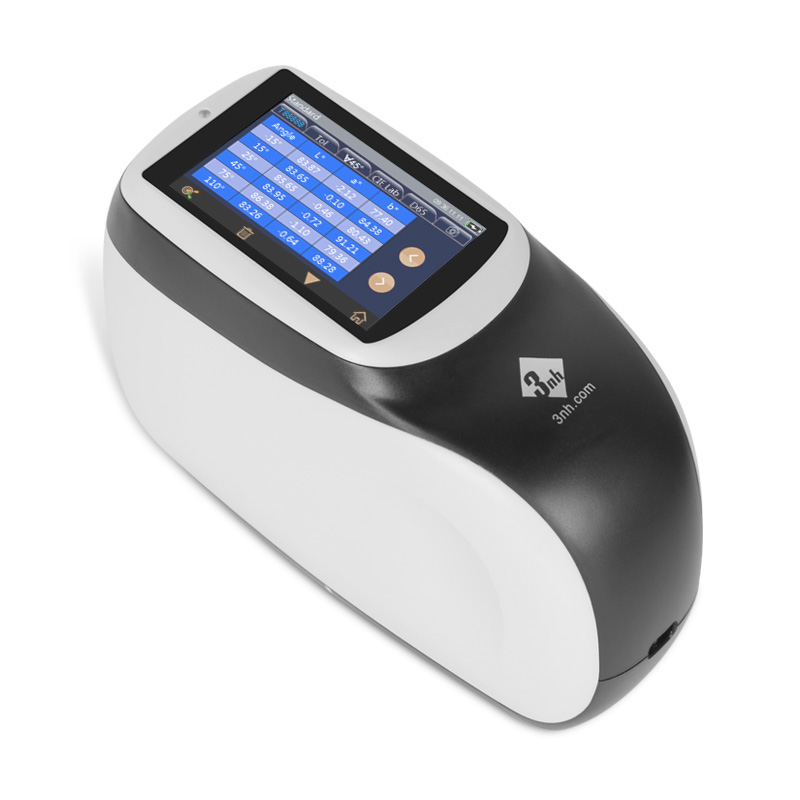
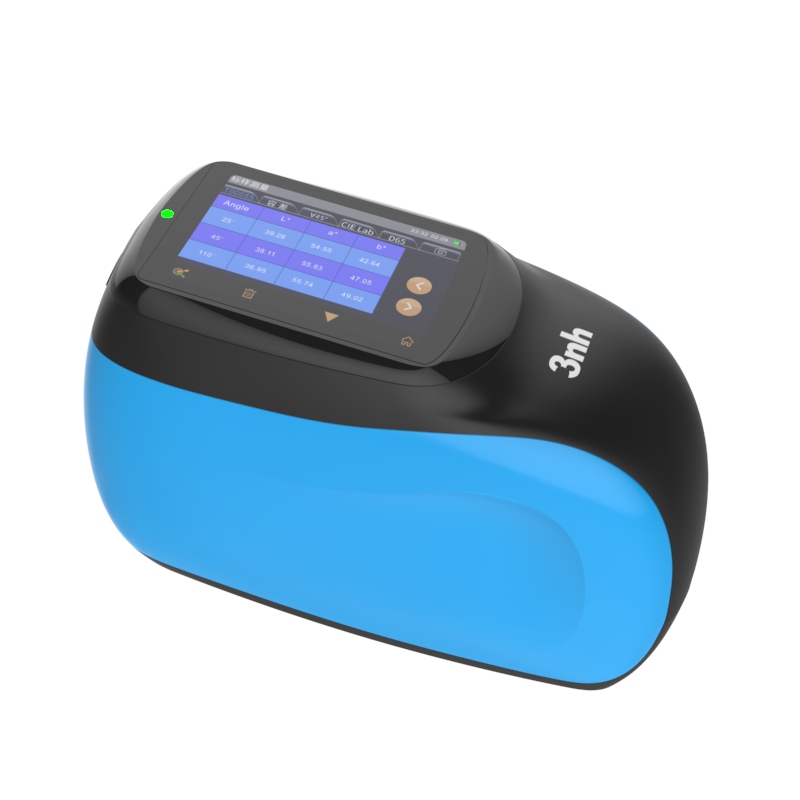
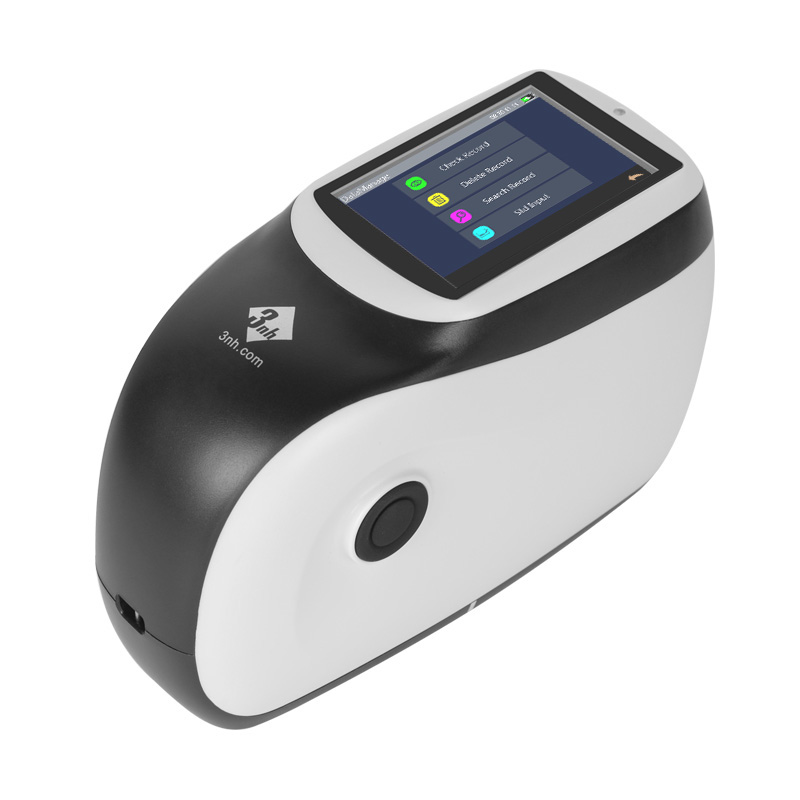
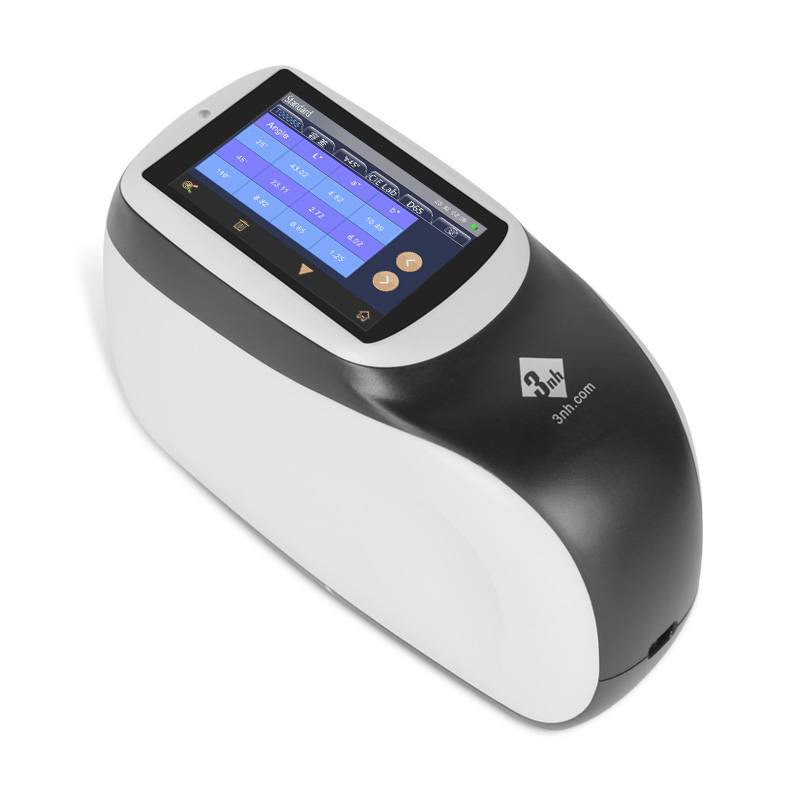
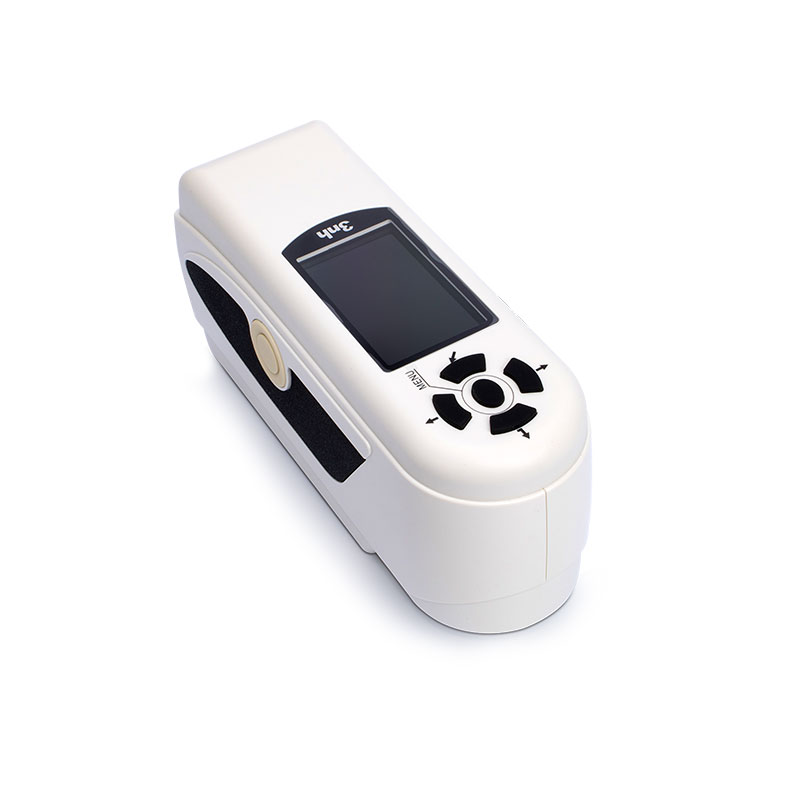
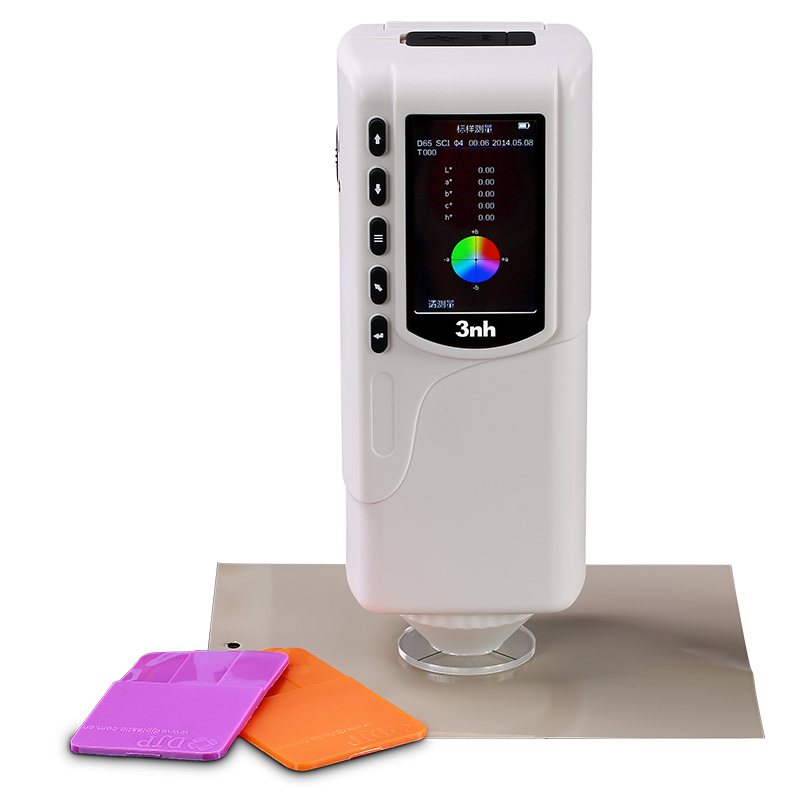
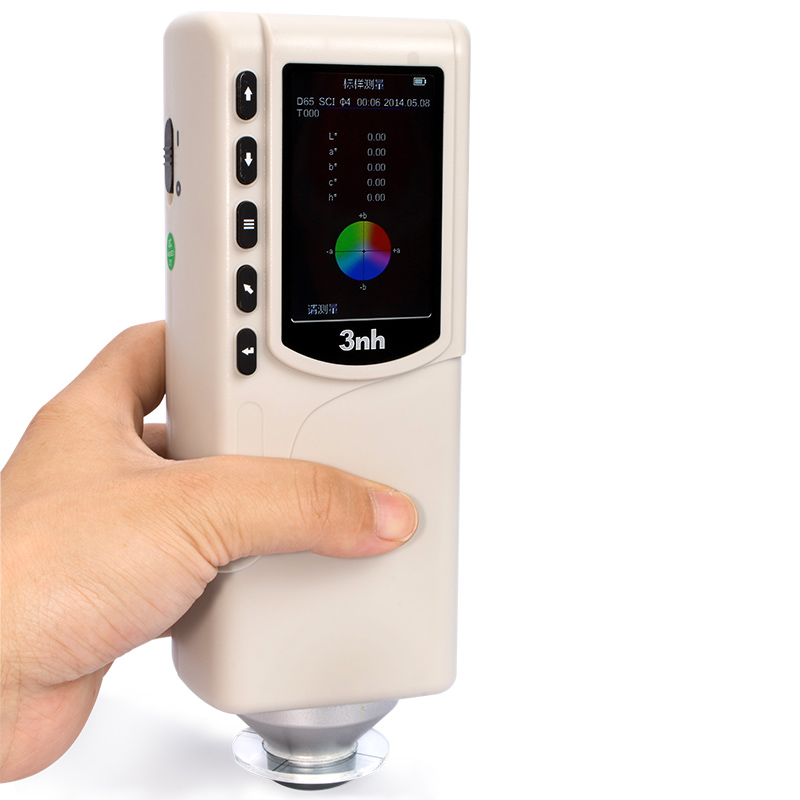
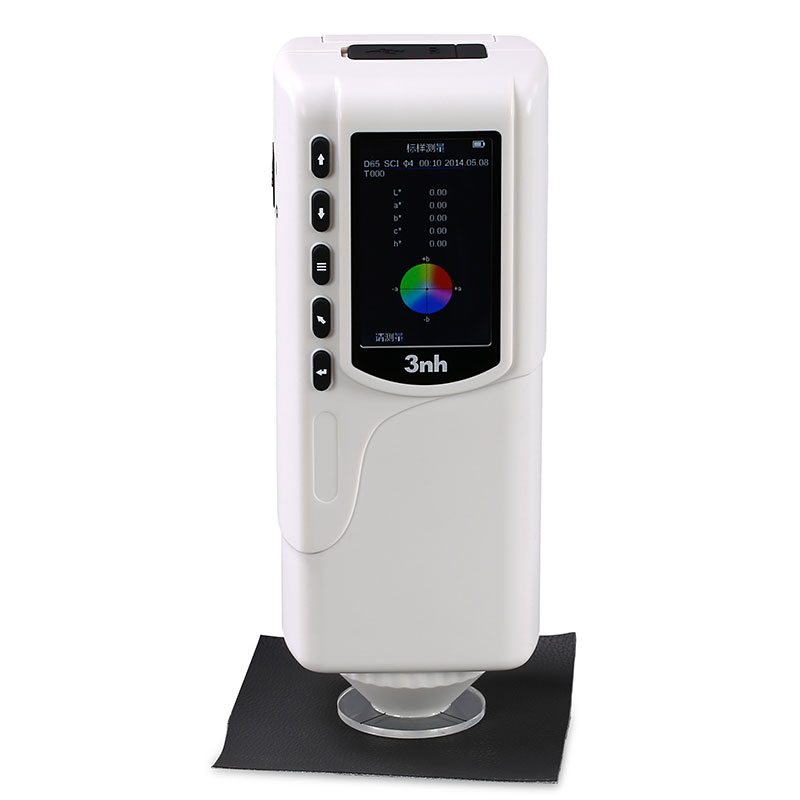
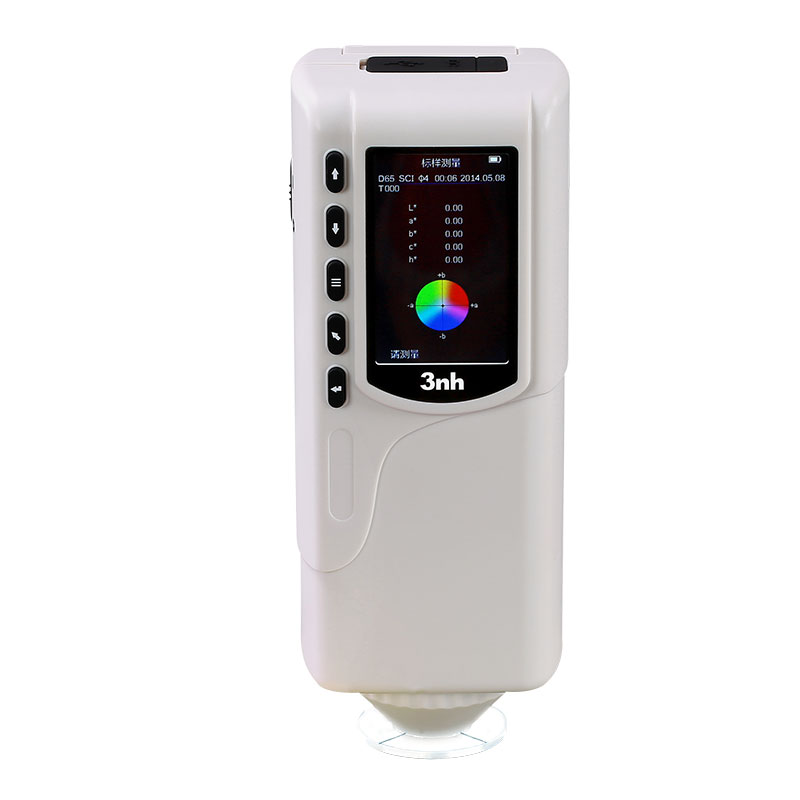
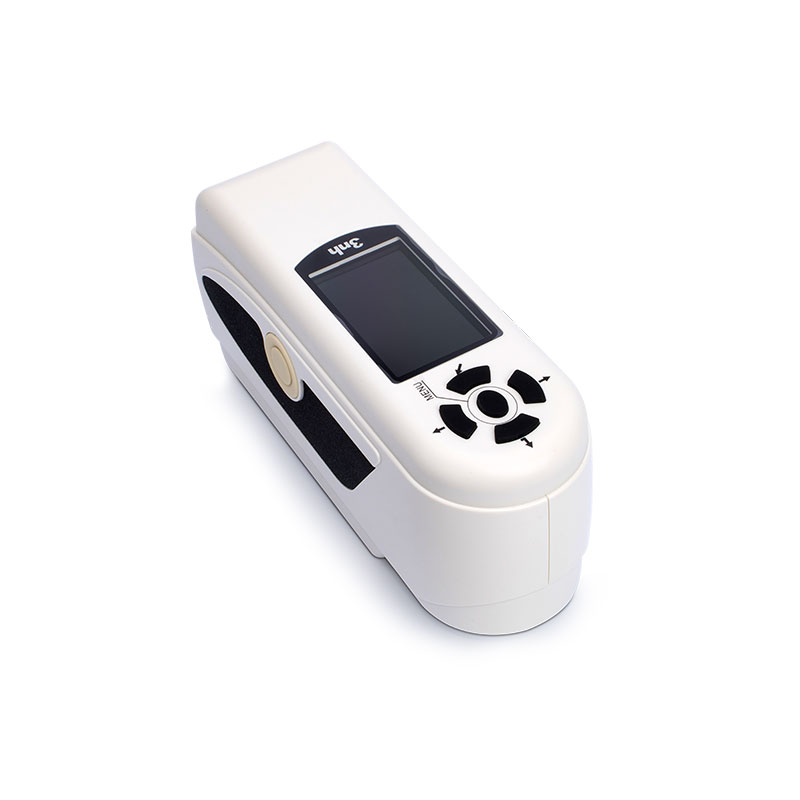
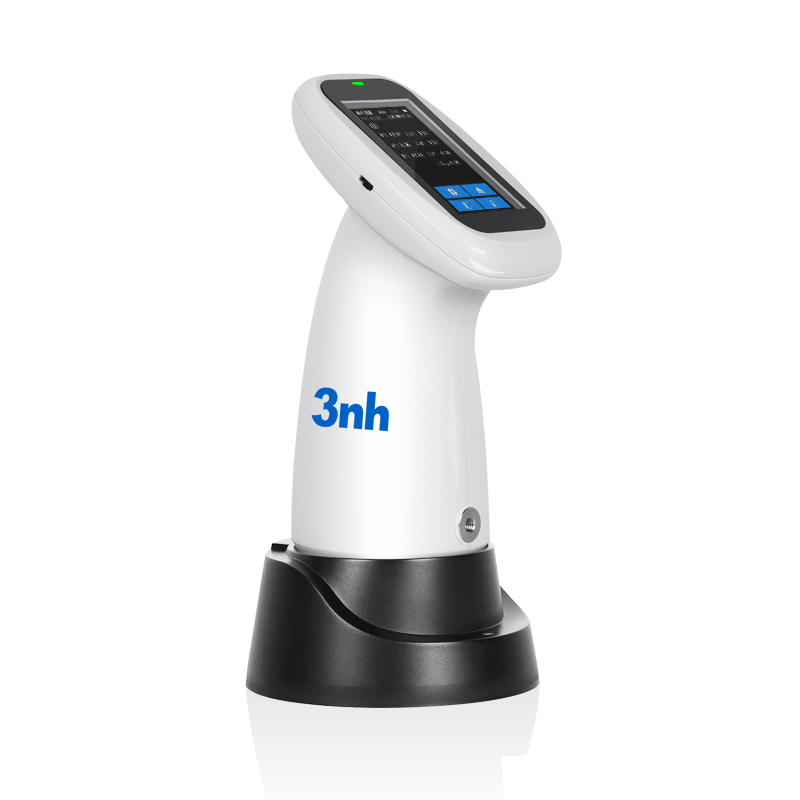
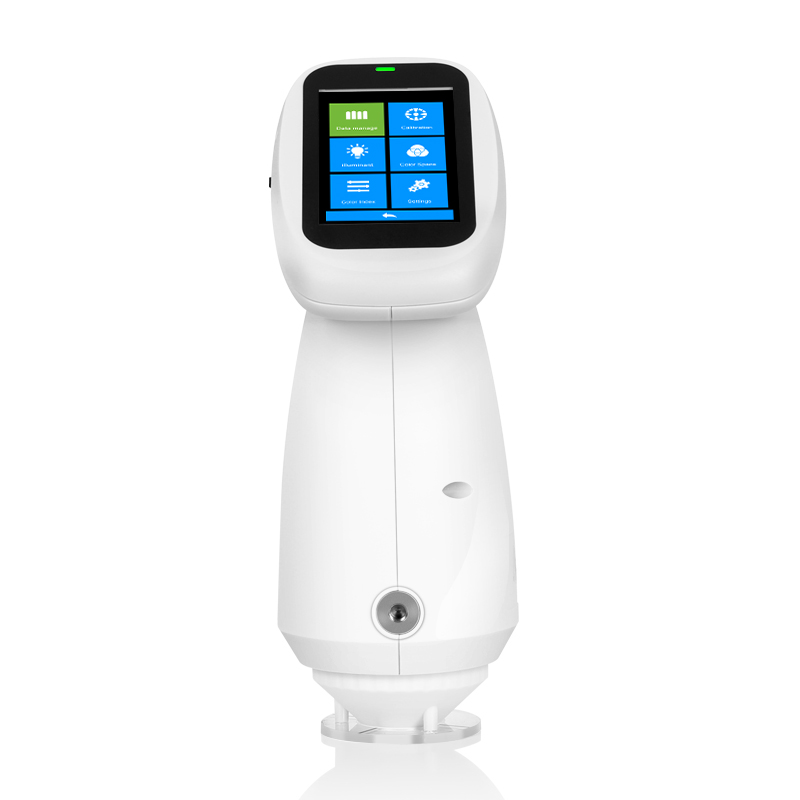
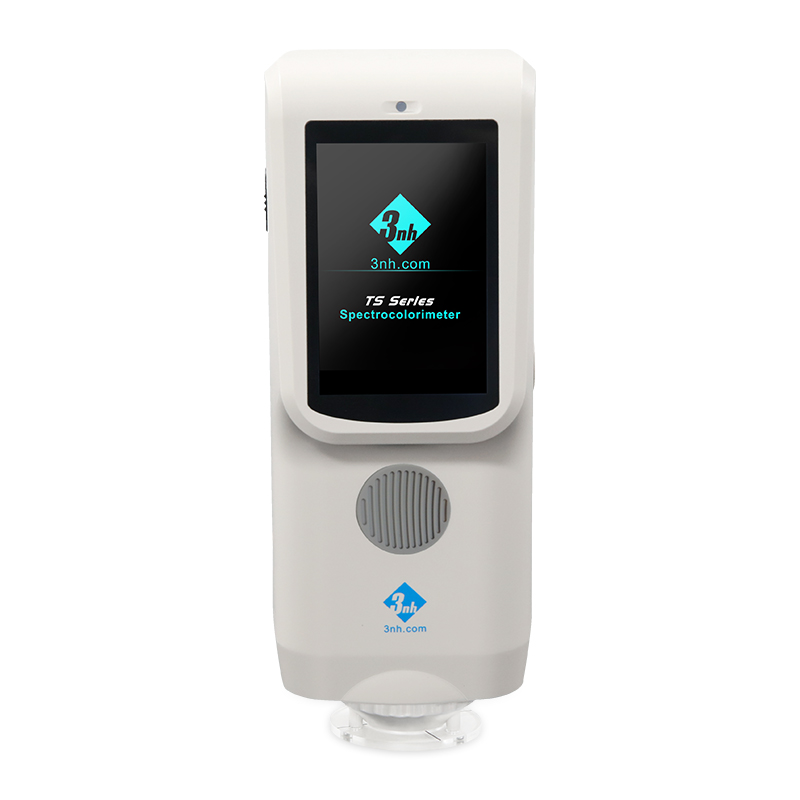
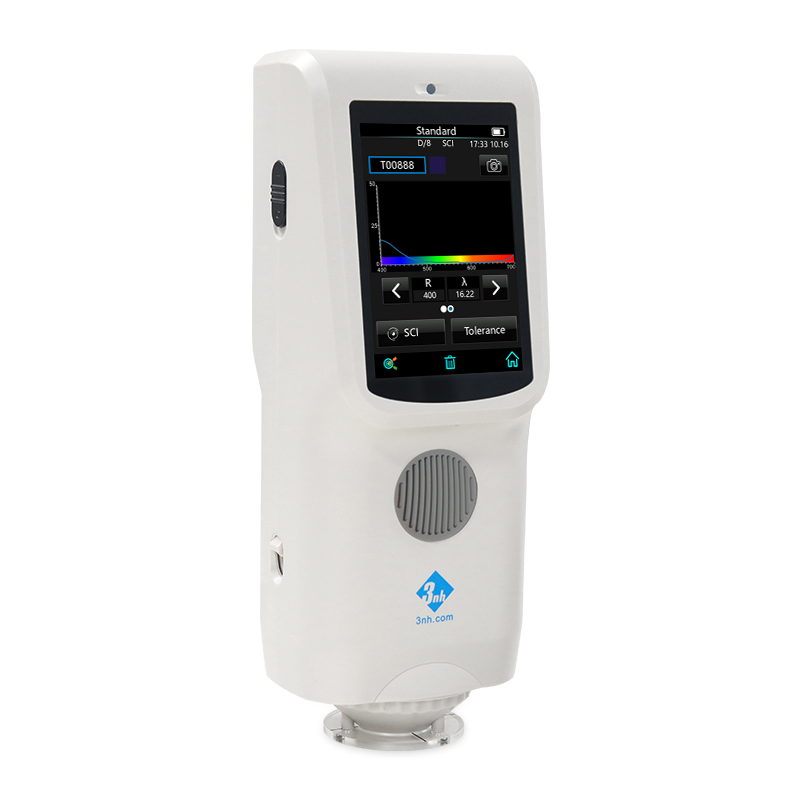
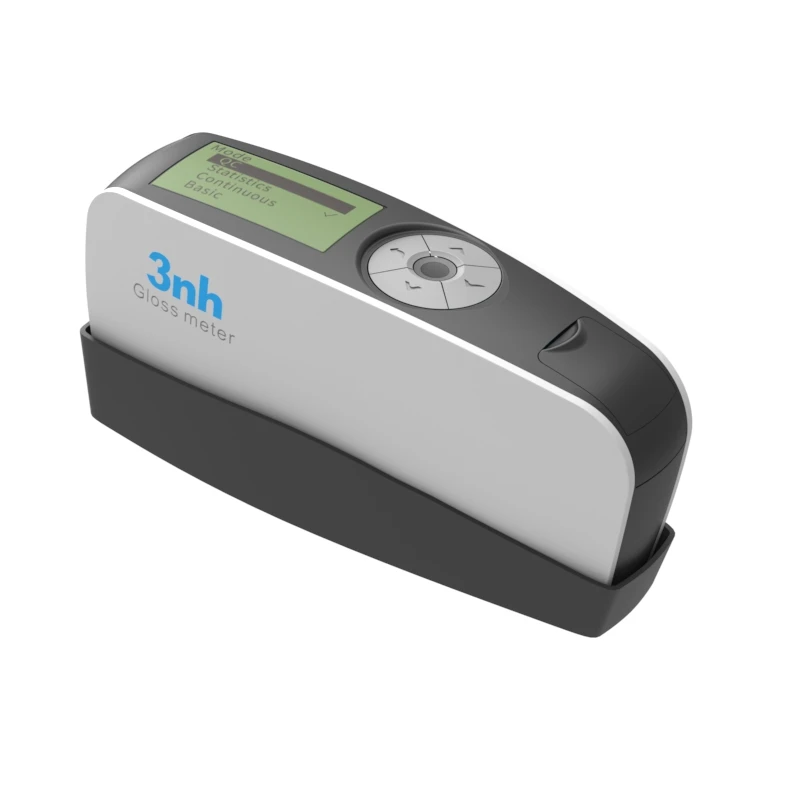
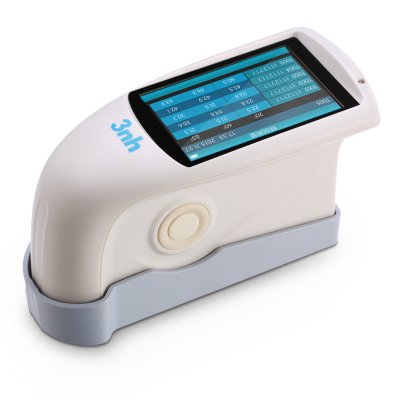
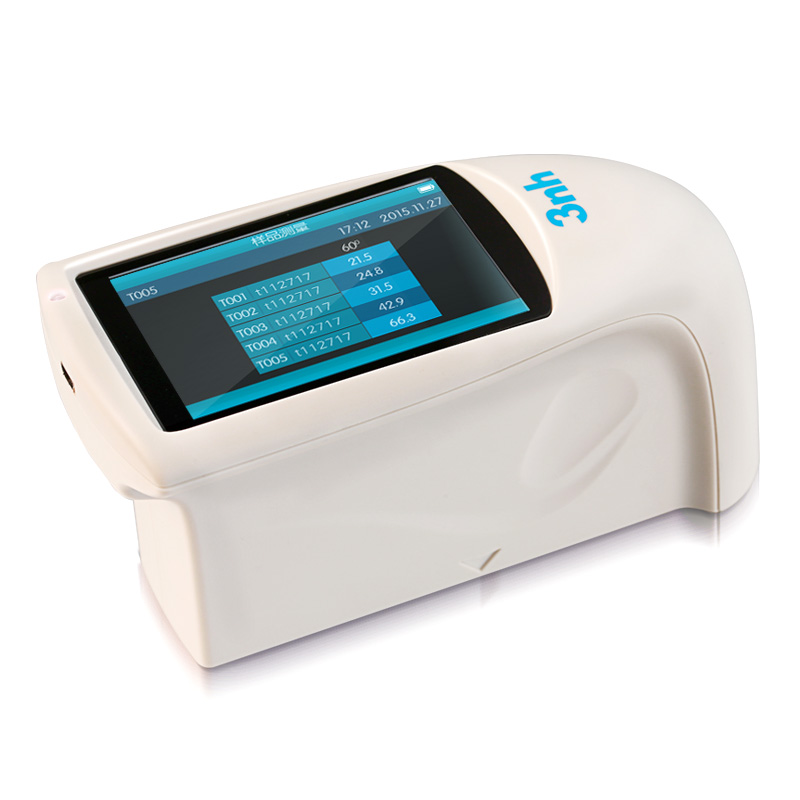
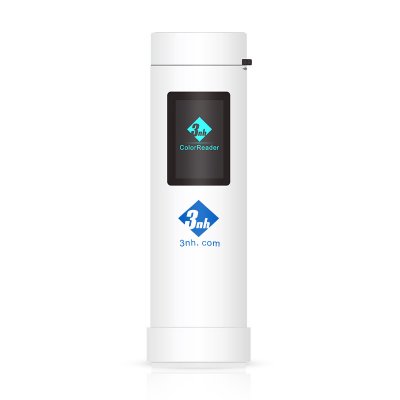
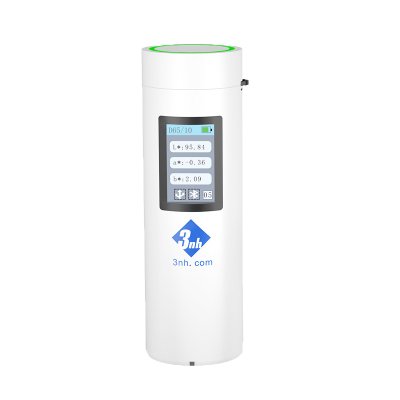
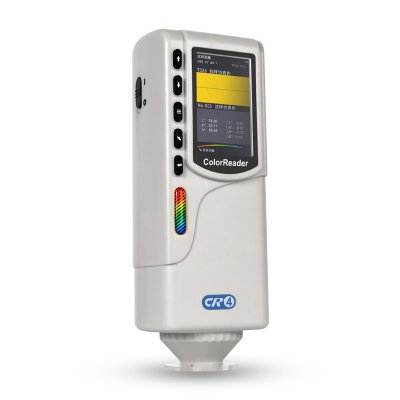
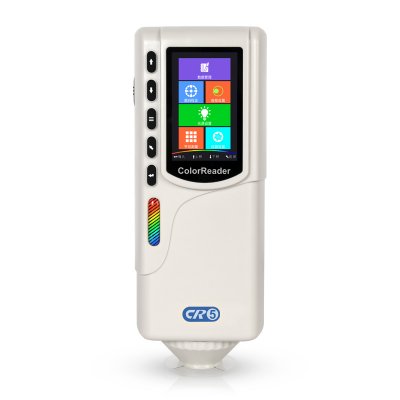
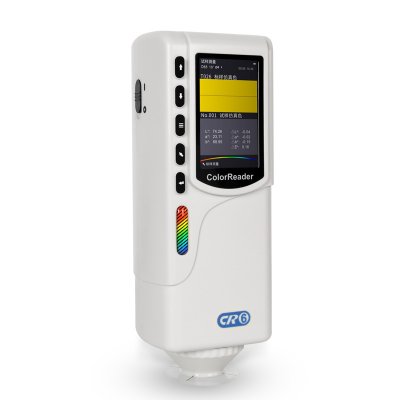
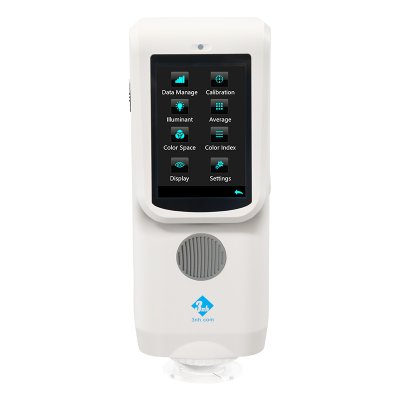
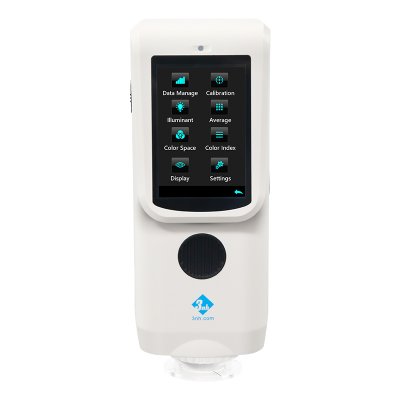
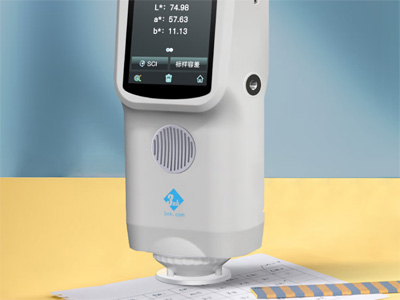
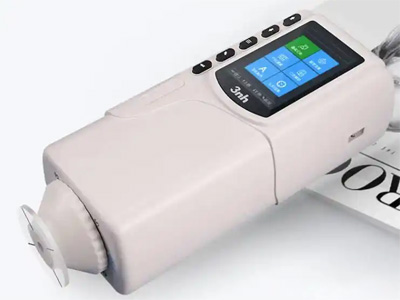
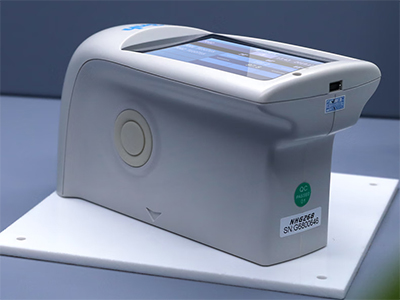
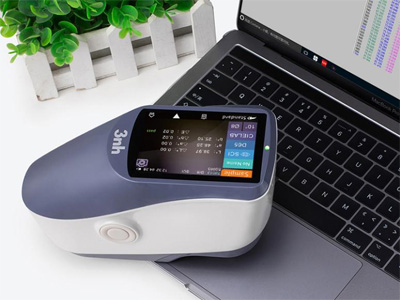
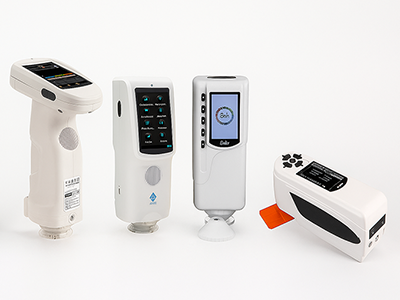
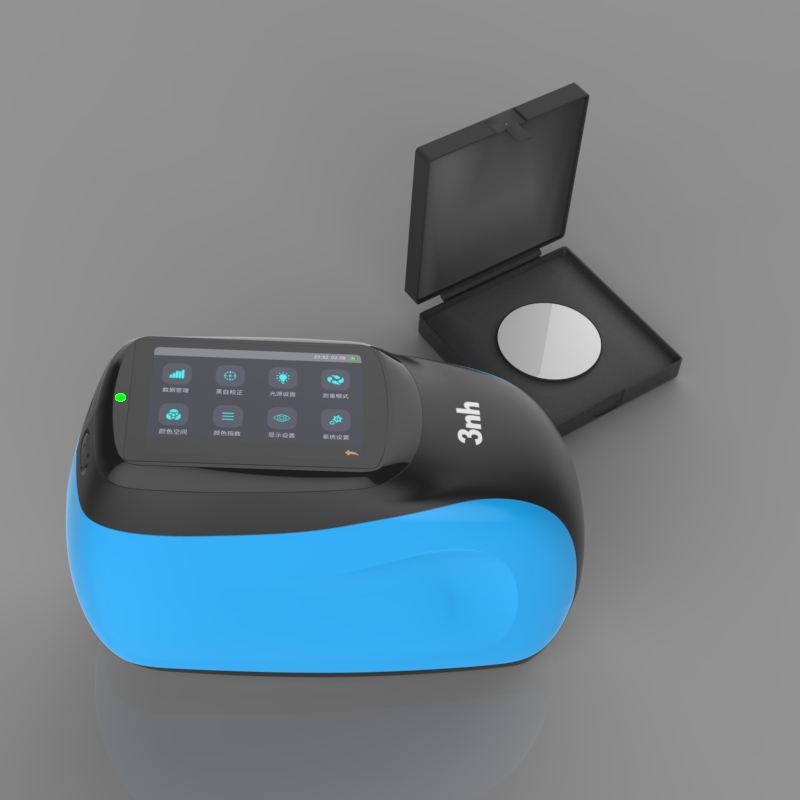
Portable Horizontal Multi Angle Spectrophotometer
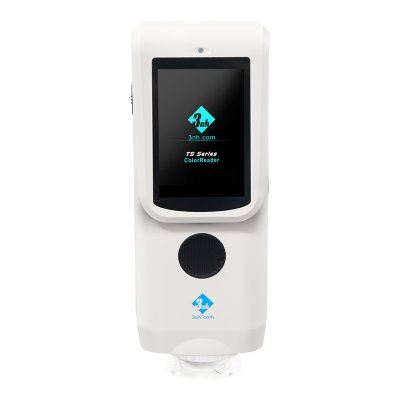
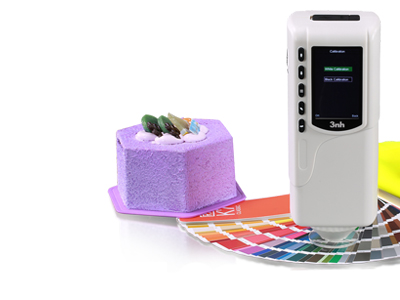
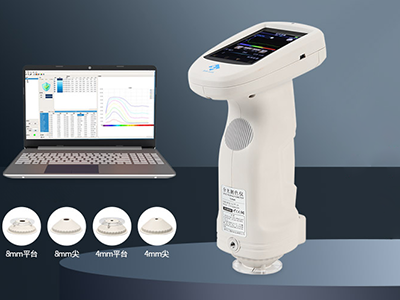
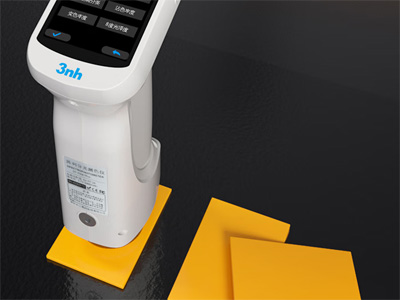
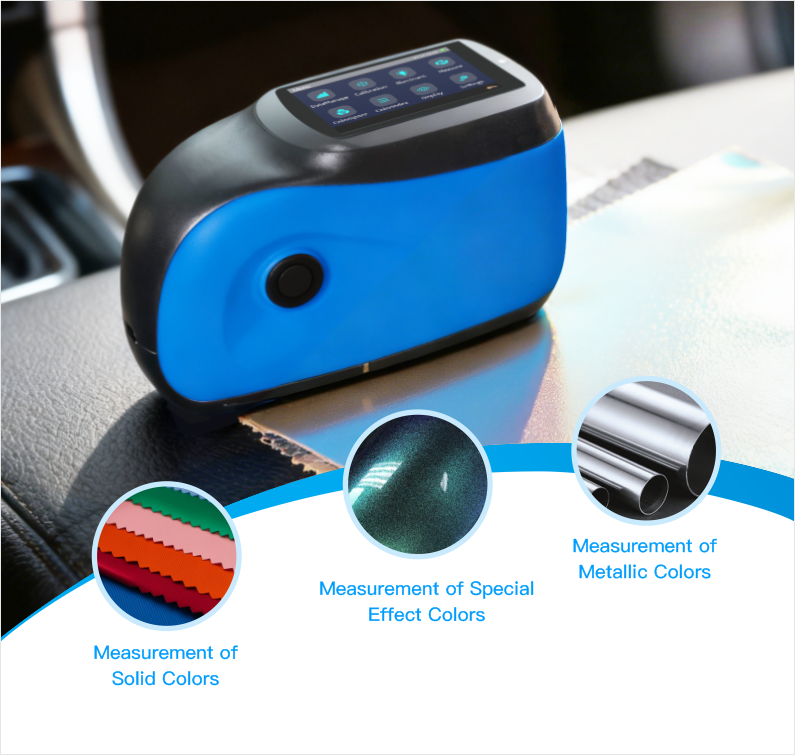
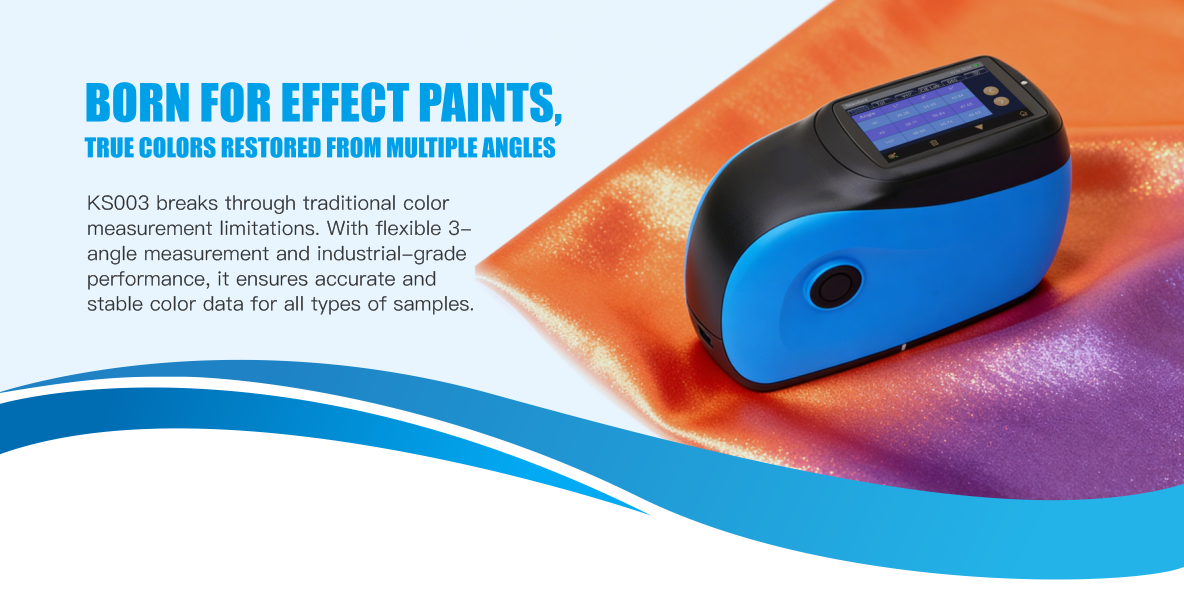
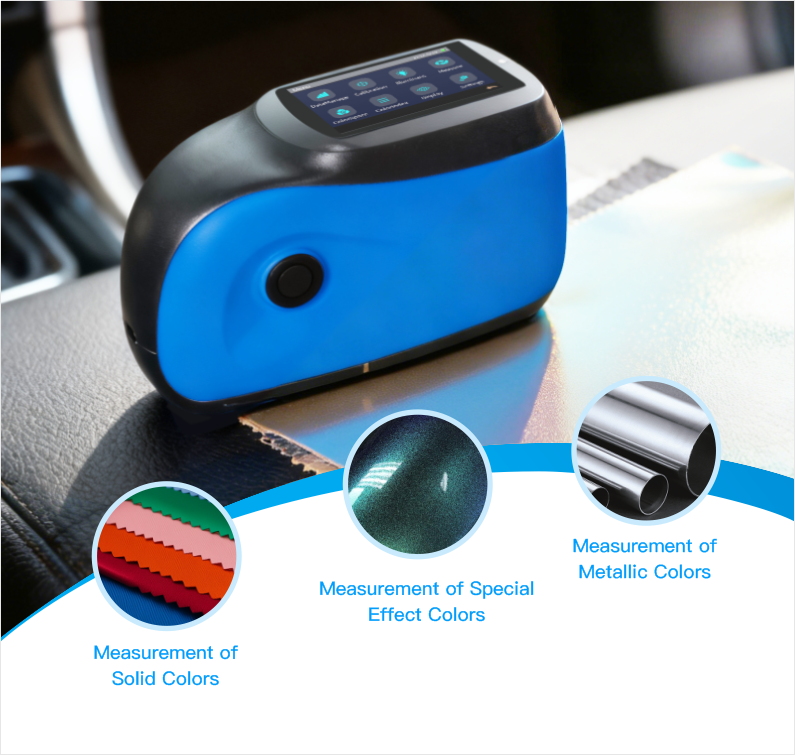
Multi-Angle Spectrophotometer is specially designed for accurate measurement of metallic, pearlescent, and other special-effect color products. it precisely evaluates special-effect surfaces and ensures compliance with tolerance standards, delivering repeatable and reproducible readings of sparkle, color travel, and coarseness. Widely used in automotive, plastics, cosmetics, and other industries for quality control of effect finishes.
Key Highlights
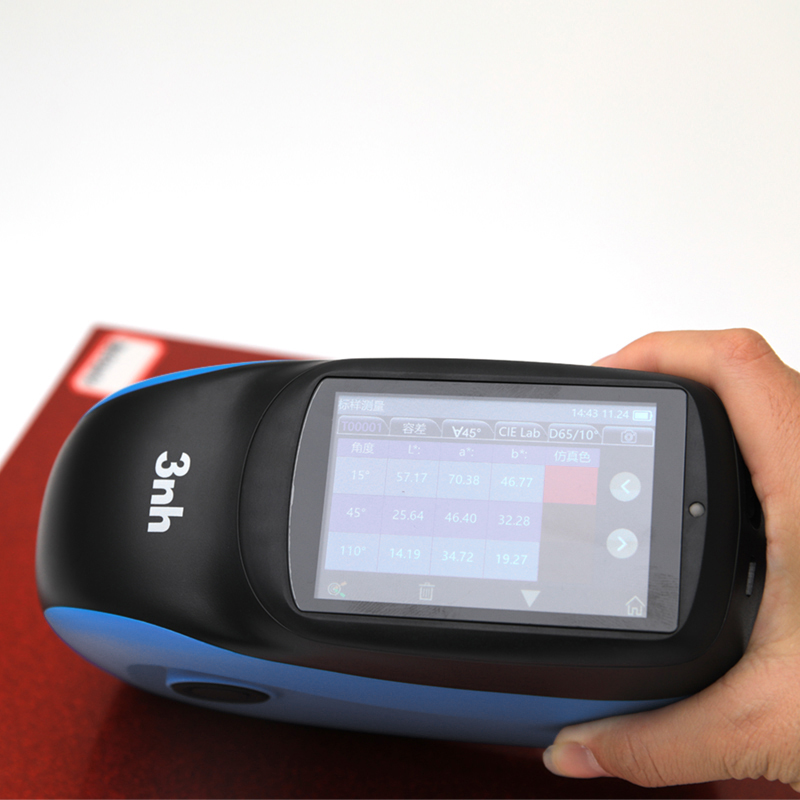
3 measurement angles, easy-to-use entry-level device
256-image element double-array CMOS image sensor
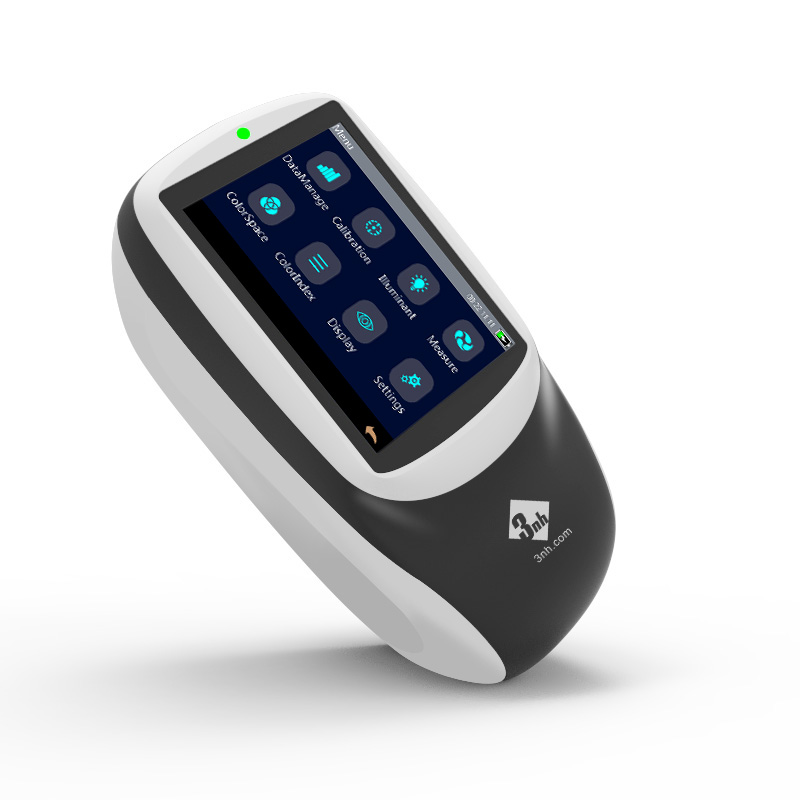
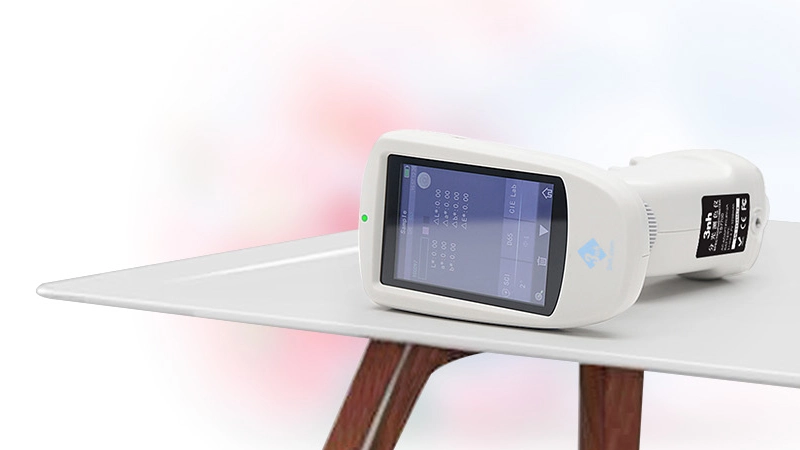
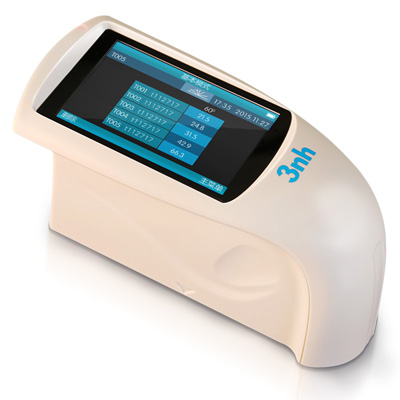
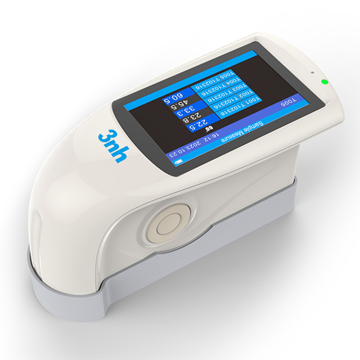
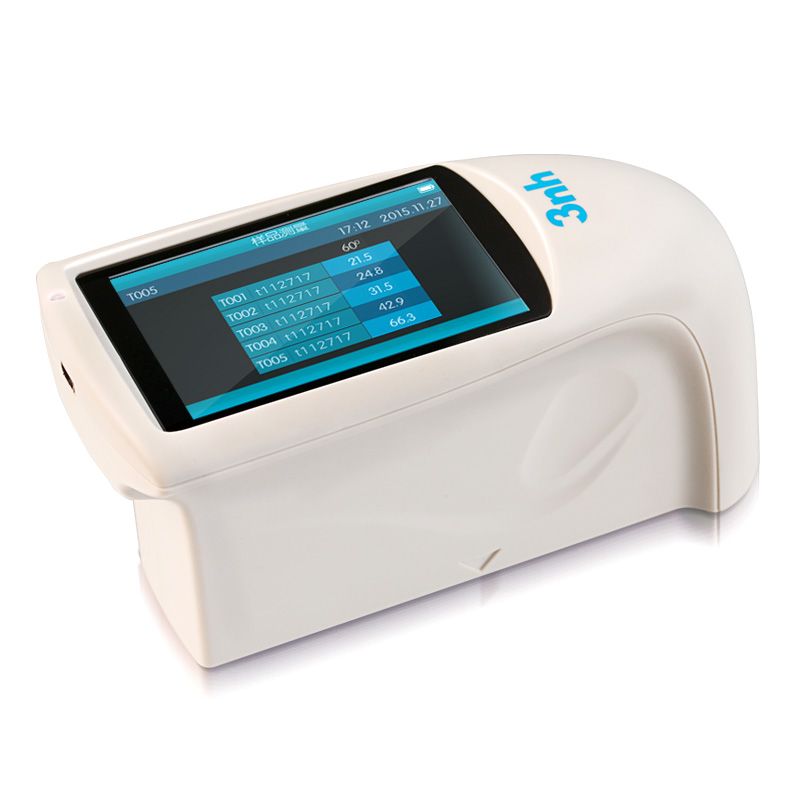
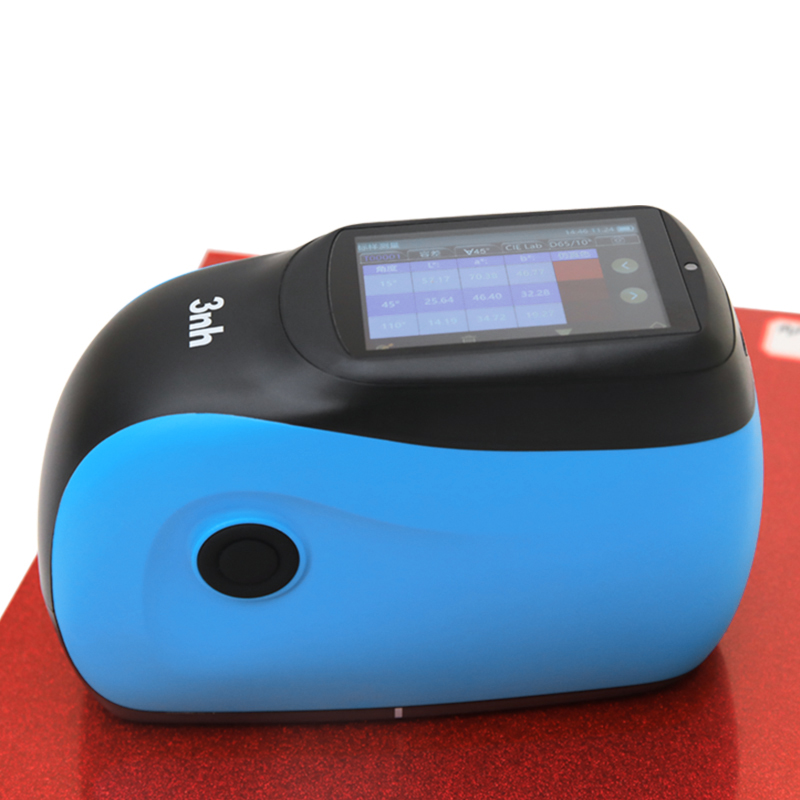
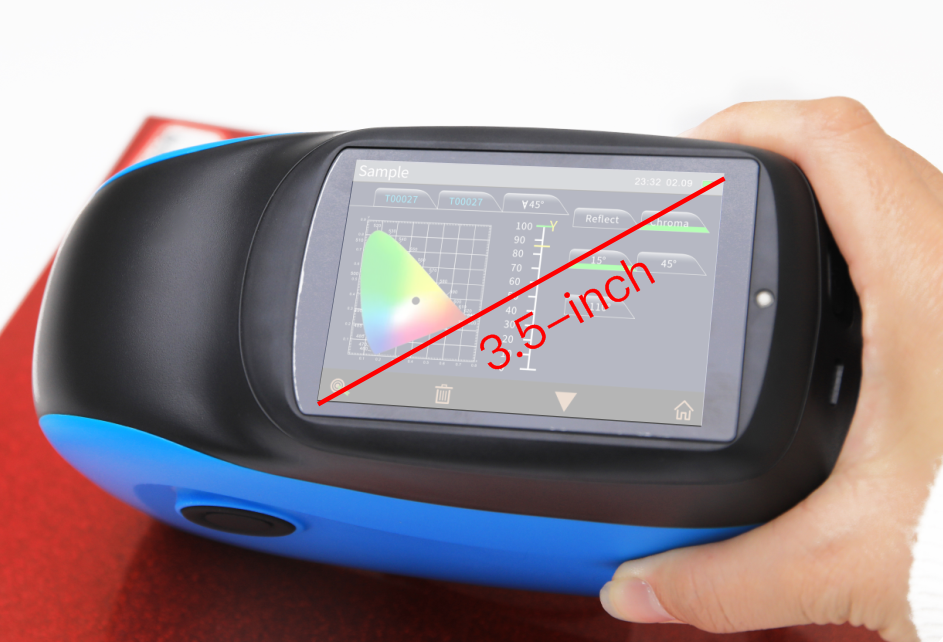
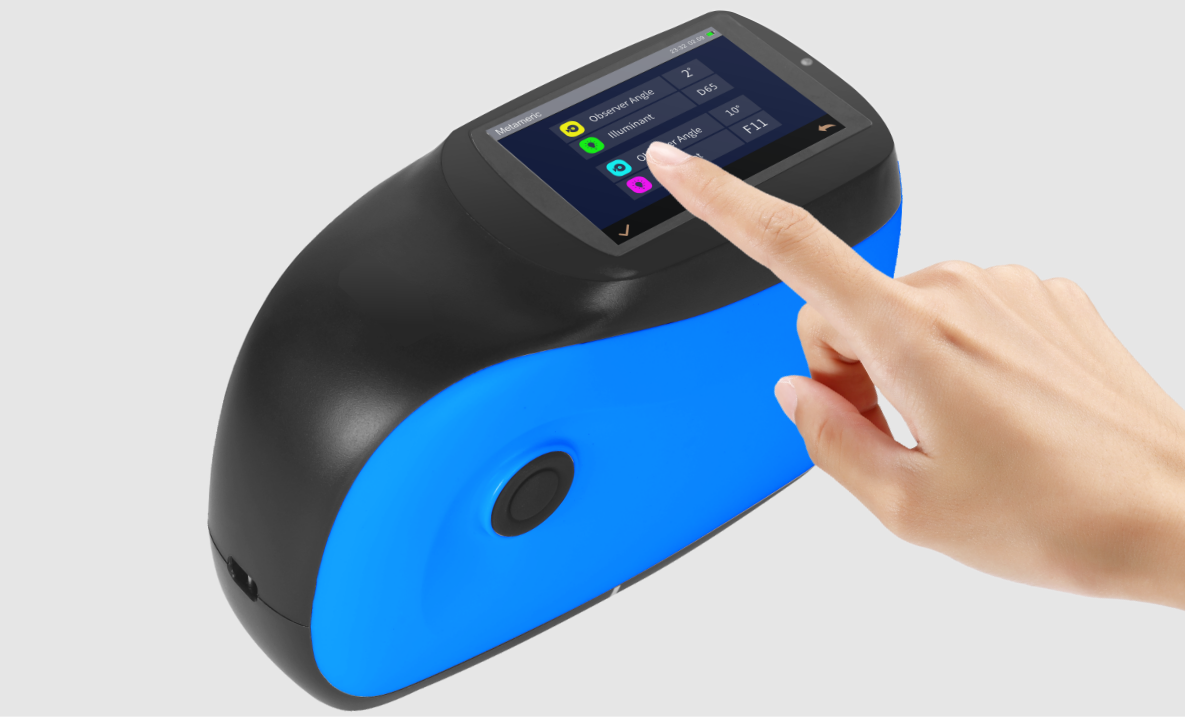
3.5-inch LCD Capacitive Touch Screen
Full spectrum LED light source
Excellent agreement between instruments ΔE*<0.20
Φ23mm Measuring Aperture
Widely applicable to industries such as coatings, paints, automobiles, cosmetics, inks, etc
SPECIAL EFFECT COLORS, MEASURED
WITH PRECISION.
Multi-angle assurance, consistent colors.

KS006 Multi-Angle Spectrophotometer is specially designed for accurate measurement of metallic, pearlescent, and other special-effect color products. Equipped with six spectral measurement angles, it precisely evaluates special-effect surfaces and ensures compliance with tolerance standards, delivering repeatable and reproducible readings of sparkle, color travel, and coarseness. Widely used in automotive, plastics, cosmetics, and other industries for quality control of effect finishes.
Product Features
l Measures special-effect materials using six measurement angles.
l Utilizes a built-in color camera to capture color, sparkle, graininess, and coarseness.
l Features a light source with a 10-year lifespan and a 256-pixel CMOS detector.

Highlighted Capabilities
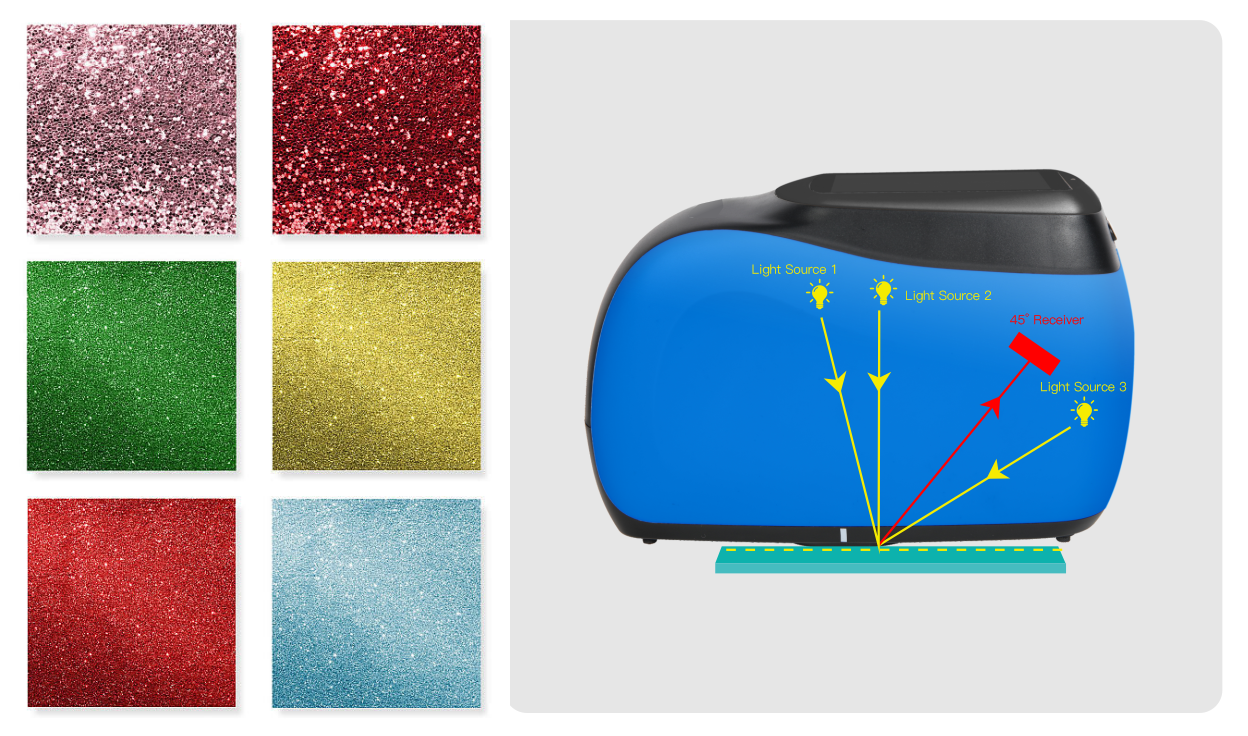
1. 3-Angle Simultaneous Measurement for Precise Capture of Special Effect ColorsSimultaneous Measurement Capability: 1 receiver + 3 light sources measure three angles (45as15°/45as45°/45as110°) simultaneously, eliminating the need for multiple adjustments and tripling efficiency.
Full-Scenario Coverage: Adapts to all types of special-effect finishes, including automotive paints, plastic components, and cosmetic packaging, accurately evaluating appearance differences from various angles.
International Standard Compliance: Meets 12 international standards such as ASTM D2244, DIN 5033, and ISO 7724, ensuring globally recognized measurement results.
2. 10-Year Light Source Lifespan, Setting the Benchmark for Industrial-Grade Reliability
Exceptional Durability: Blue-enhanced full-spectrum LED light source with a lifespan of 10 years or 5 million measurements, over 3 times longer than conventional sources.
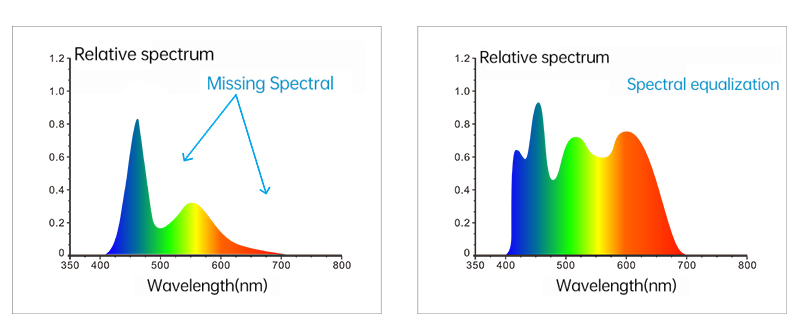
Spectral Integrity: Covers the full 400nm-700nm visible light range without specific band gaps, enhancing measurement accuracy for metallic and pearlescent colors.

Low Maintenance Advantage: Eliminates frequent light source replacement, significantly reducing annual maintenance costs and supporting 24/7 continuous factory operation.
International Standards Compliance:Conforms to 10+ international standards including ASTM D 2244, DIN 5033, ISO 7724, SAE J 1545, meeting global testing requirements.

3. High-Precision Measurement Powered by Concave Grating Spectroscopy and CMOS Technology
Core Hardware Configuration: Equipped with a 256-pixel dual-array CMOS detector and concave grating spectroscopy technology, it delivers higher resolution for more accurate color measurement.
![]()
High Repeatability: Colorimetric repeatability of 0.02 ΔEab and inter-instrument agreement of 0.2 ΔE00 ensure seamless data comparison across different factories and devices.

Rapid Response: Measures a single angle in just 1 second, and completes three-angle measurements in 3 seconds—outperforming traditional equipment in efficiency.
4. Comprehensive Data Visualization with Barrier-Free Operation
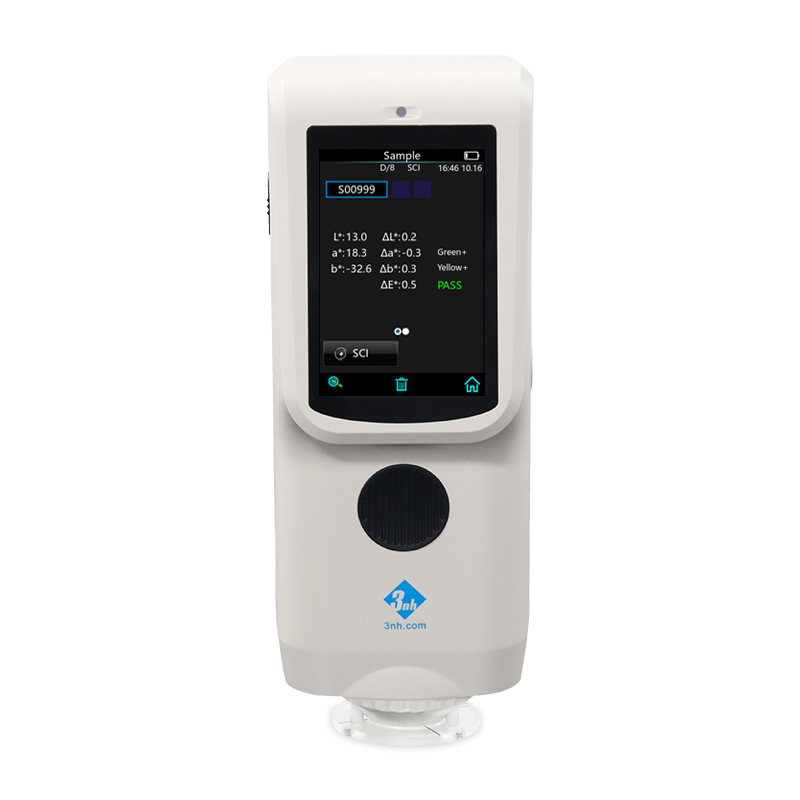
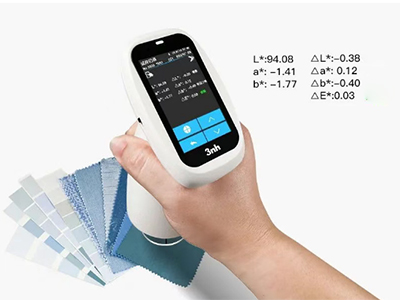
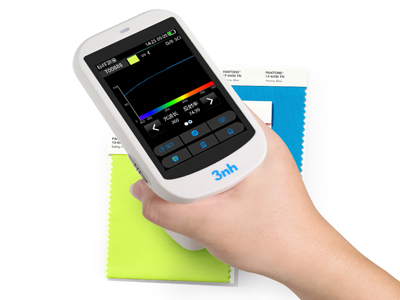
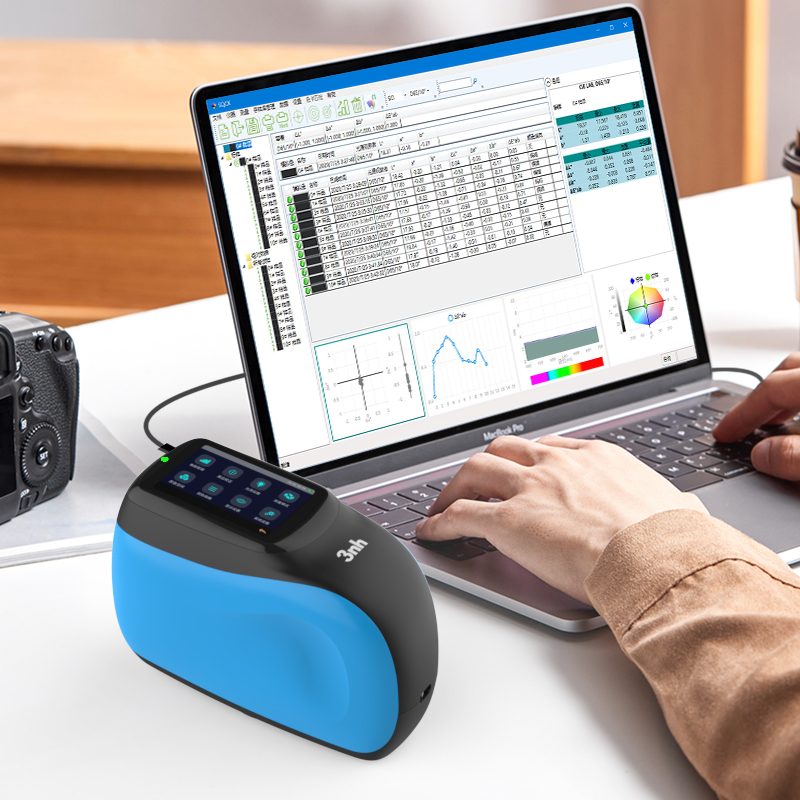
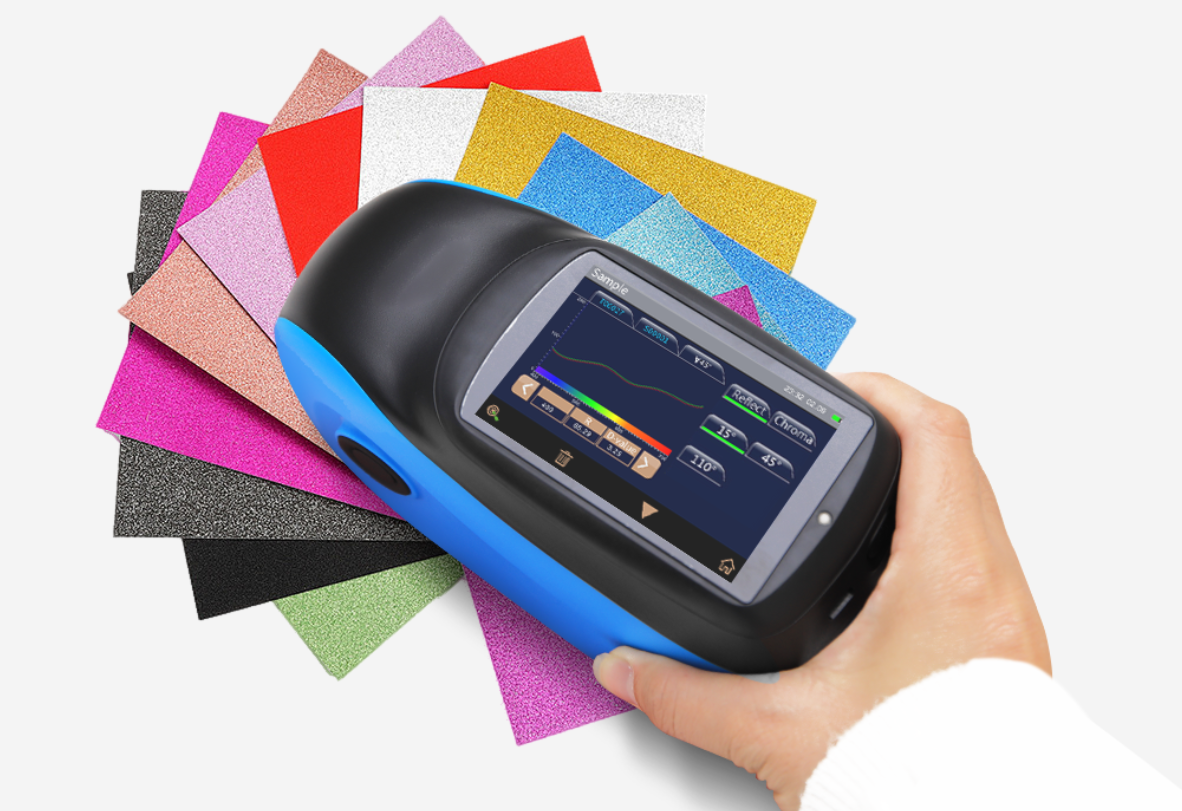
Visual Display:Featuring a 3.5‑inch full‑color touchscreen that directly displays spectral graphs, color difference values, pass/fail judgments, and color simulations.

Smart Assistance:Built‑in color camera preview ensures precise positioning of the measurement area, avoiding errors caused by misalignment.

Flexible Operation:Supports dual triggering via buttons or software, with multiple measurement modes—single, continuous, and averaging (1–99 times)—to meet diverse application needs.
5. Fully Compatible Color System to Meet Customized Needs Across Industries
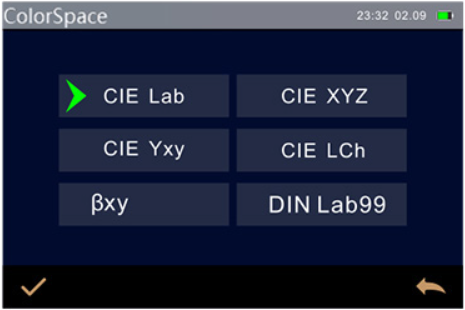
Multiple Color Spaces: Supports 8 color spaces including CIE LAB, XYZ, LCh, and Hunter Lab, complying with industry standards in automotive, plastics, cosmetics, and more.

Multiple Color Difference Formulas: Incorporates mainstream formulas such as ΔEab, ΔE94, ΔEcmc(2:1), ΔEcmc(1:1), ΔE*00, DINΔE99, ΔE DIN6175, various automotive brand-specific formulas, ΔE(Hunter), ΔE*ch, and ΔE*uv.
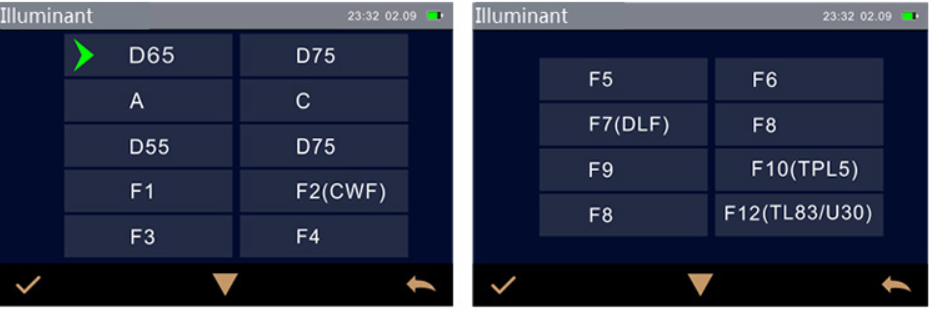
Multiple Observing Conditions: Over 30 illuminants (e.g., D65, A, D50) and dual observer angles (2°/10°) to accommodate testing requirements across different countries and regions.

6. Application Scenarios
Automotive Industry:
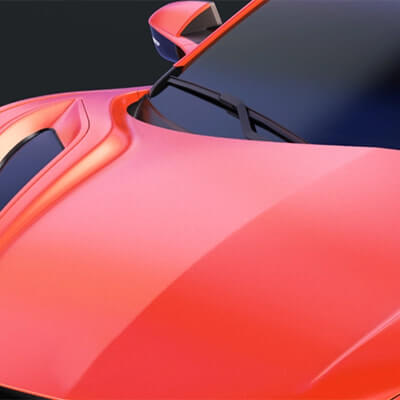
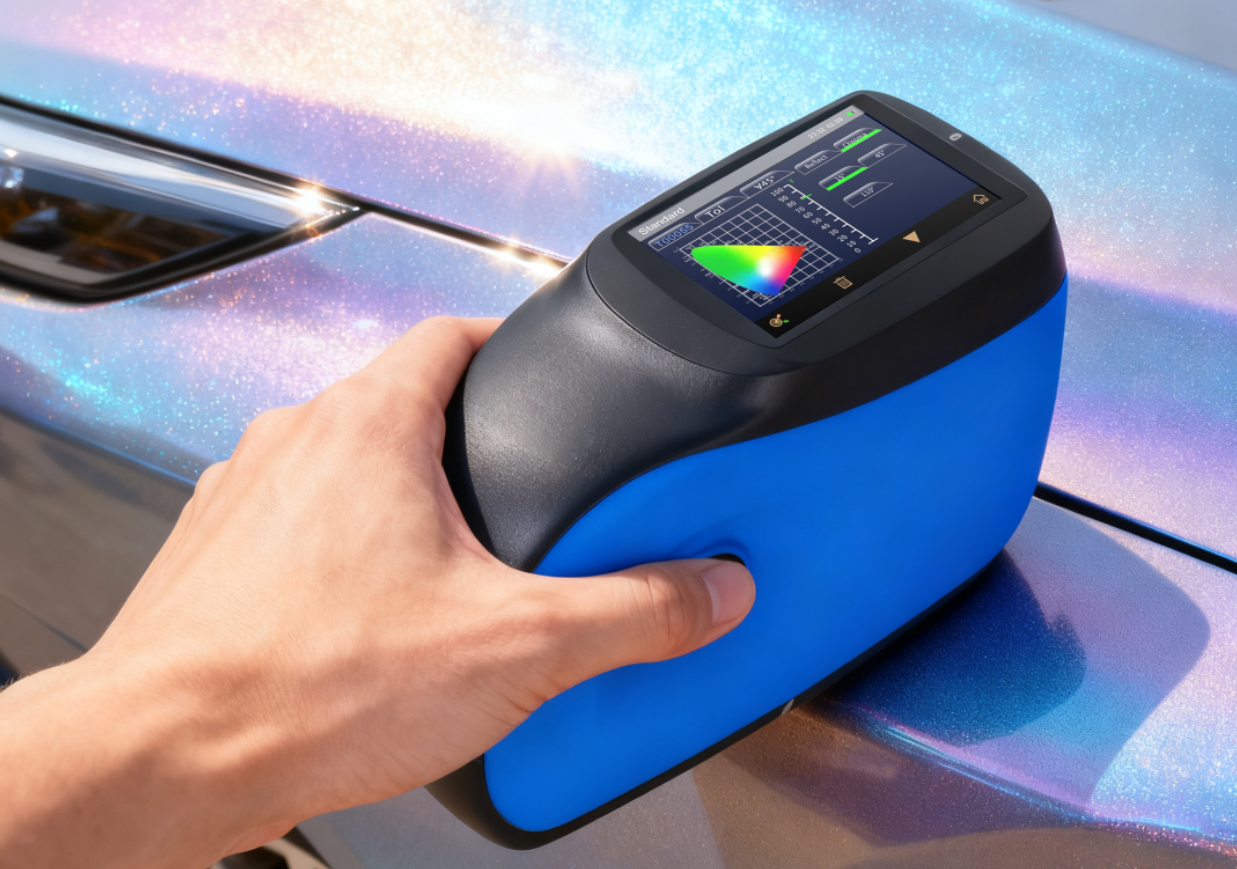
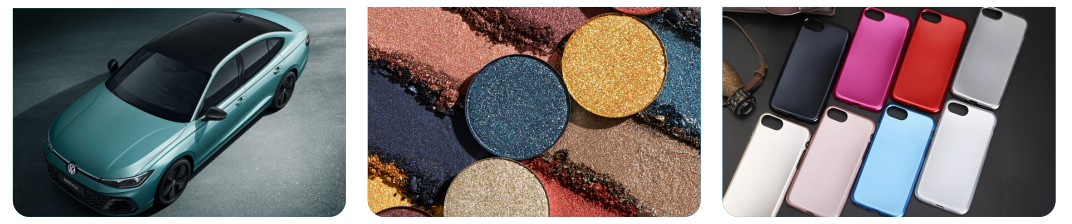
Multi‑angle color difference control for metallic paints on vehicle bodies and pearlescent paints on bumpers, ensuring color consistency across the entire vehicle.
Cosmetics Industry:
Batch‑to‑batch comparison of pearlescent effect colors (e.g., lipstick, eyeshadow), minimizing customer complaints caused by visual discrepancies.
Plastics Industry:
Measurement of special effect colors for home appliance housings and toys, guaranteeing color uniformity across different production sites.

Technical Parameters of KS003
Model | KS3003 |
Measurement Geometry | 3 measurement angles (3 light sources, 1 receiver) |
Measure Angle | 45° Receiver: 45as15°, 45as45°, 45as110° Compliant Standards: ASTM D 2244, E 308, E 1164, E 2194, E 2539; DIN 5033, 5036, 6174, 6175-1, 6175-2; ISO 7724, 11664-4; SAE J 1545 |
Application | Provide accurate and consistent color measurement for metallic, pearlescent and other complex special effect color products |
Light Source | Full spectrum LED light source with blue enhancement |
Lamp Life | 5 years, 3 million times measurements |
Spectrophotometric Mode | Concave Grating |
Sensor | 256 Image Element Double Array CMOS Image Sensor |
Wavelength Range | 400nm-700nm |
Wavelength Interval | 10nm |
Measurement Range | 0~600% |
Semiband Width | 10nm |
Measuring Aperture | Illumination size Φ23mm / Measuring spot 9X12mm (Customized: Illumination size Φ10mm / Measuring spot 6X8mm) |
Color Space | CIE LAB,XYZ,Yxy,LCh,βxy,DIN Lab99 |
Color Difference Formula | ΔEab, ΔE94, ΔEcmc(2:1), ΔEcmc(1:1), ΔE00, DINΔE99, ΔE DIN6175, Various Automotive Brand Color Difference Formulas, ΔE(Hunter), ΔEch, ΔE*uv |
Other Colorimetric Index | Flop Index, Int-Em |
Observer Angle | 2°/10° |
Illuminant | D65,A,C,D50,D55,D75,F1,F2(CWF),F3,F4,F5,F6,F7(DLF),F8,F9,F10(TPL5),F11(TL84),F12(TL83/U30),B,U35,NBF, |
Display | Spectral Graph/Data, Sample Colorimetric Values, Color Difference Values/Graph, Pass/Fail Results, Color Simulation |
Measuring Time | Approx. 1 second for one angle |
Repeatability | Spectral reflectance: Standard deviation within 0.08% |
Reproducibility | ΔE*<0.10,avg on the gray tile of BCRA tile set |
Inter-instrument Error | 0.2ΔE*00(avg on reference Series II BCRA tile set) |
Effect Parameters | / |
Effect Measurement | / |
Effect Repeatability | / |
Effect Reproducibility | / |
Trigger mode | button trigger, software trigger |
Measuring Mode | Single measurement, average measurement (1-99), continuous measurement (1-99) |
Locating Mode | Color camera preview |
Dimension | L*W*H=195X83X128mm |
Weight | About 1Kg |
Power | lithium-ion battery, 3.7V,5000mAh, Continuous test 5000 times within 8 hours of full charge |
Display | 3.5-inch TFT color LCD, Capacitive Touch Screen |
Interface | USB, Bluetooth |
Data Storage | 1000 pcs Standards,10000 pcs Samples |
Language | Simplified Chinese, Traditional Chinese, English, Russian |
Operating Environment | 10℃ to 50℃, humidity does not exceed 85%, no condensation |
Storage Environment | -20℃ to 50℃, humidity does not exceed 85%, no condensation |
Calibration | Built-in white board parameters, external white board,black cavity |
Calibration Interval | 4 hours,8 hours,24 hours,Startup calibration |
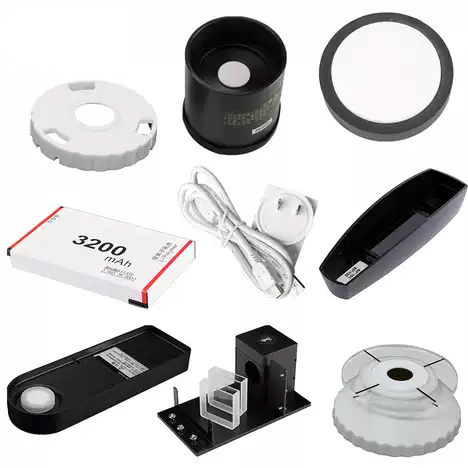
Standard accessories | Power adapter, data cable, user manual, quality management software , calibration box, black calibration tile, protective cover, wrist strap (Software Download Address:http://www.gandongdian.com/download/ ). |
Optional Accessory | Micro-printer |
Technical Parameters of KS006
Model | KS006 |
Measurement Geometry | 6 measurement angles (8 illumination sources, 1 receivers) |
Measure Angle | 45° Receiver: |
Application | Provide accurate and consistent color measurement for metallic, pearlescent and other complex special effect color products |
Light Source | Full spectrum LED light source with blue enhancement |
Lamp Life | 5 years, 3 million times measurements |
Spectrophotometric Mode | Concave Grating |
Sensor | 256 Image Element Double Array CMOS Image Sensor |
Wavelength Range | 400nm-700nm |
Wavelength Interval | 10nm |
Measurement Range | 0~600% |
Semiband Width | 10nm |
Measuring Aperture | Illumination size Φ23mm / Measuring spot 9X12mm (Customized: Illumination size Φ10mm / Measuring spot 6X8mm) |
Color Space | CIE LAB,XYZ,Yxy,LCh,βxy,DIN Lab99 |
Color Difference Formula | ΔEab, ΔE94, ΔEcmc(2:1), ΔEcmc(1:1), ΔE00, DINΔE99, ΔE DIN6175, Various Automotive Brand Color Difference Formulas, ΔE(Hunter), ΔEch, ΔE*uv |
Other Colorimetric Index | Flop Index, Int-Em |
Observer Angle | 2°/10° |
Illuminant | D65,A,C,D50,D55,D75,F1,F2(CWF),F3,F4,F5,F6,F7(DLF),F8,F9,F10(TPL5),F11(TL84),F12(TL83/U30),B,U35,NBF, |
Display | Spectrogram/Values, Samples Chromaticity Values, Color Difference Values/Graph, PASS/FAIL Result, Color Offset, Color simulation, Sample effect value, Effect difference value |
Measuring Time | Approx. 1 second for one angle |
Repeatability | Spectral reflectance: Standard deviation within 0.08% |
Reproducibility | ΔE*<0.10,avg on the gray tile of BCRA tile set |
Inter-instrument Error | 0.2ΔE*00(avg on reference Series II BCRA tile set) |
Effect Parameters | Sparkle Grade(SG),Diffuse coarseness(DC) and Color Variation(CV) |
Effect Measurement | 6 angles Sparkle Grade(SG),Color Variation(CV):15as-45°,15as-30°,15as-15°,15as15°,15as45°,15as80° |
Effect Repeatability | Sparkle Grade(SG) Short-term repeatability: 0.11% (10 times standard deviations) (When a color plate is measured 10 times at 10 second intervals after white calibration) |
Effect Reproducibility | Sparkle Grade(SG) Reproducibility: 1.8% (10 times standard deviations) |
Trigger mode | button trigger, software trigger |
Measuring Mode | Single measurement, average measurement (1-99), continuous measurement (1-99) |
Locating Mode | Color camera preview |
Dimension | L*W*H=195X83X128mm |
Weight | About 1Kg |
Power | lithium-ion battery, 3.7V,5000mAh, Continuous test 5000 times within 8 hours of full charge |
Display | 3.5-inch TFT color LCD, Capacitive Touch Screen |
Interface | USB, Bluetooth |
Data Storage | 1000 pcs Standards,10000 pcs Samples |
Language | Simplified Chinese, Traditional Chinese, English, Russian |
Operating Environment | 10℃ to 50℃, humidity does not exceed 85%, no condensation |
Storage Environment | -20℃ to 50℃, humidity does not exceed 85%, no condensation |
Calibration | Built-in white board parameters, external white board,black cavity |
Calibration Interval | 4 hours,8 hours,24 hours,Startup calibration |
Standard accessories | Power Adapter, USB Cable, User Guide,PC Software(Software Download Address:http://www.gandongdian.com/download/), Calibration Board, black light trap,Protective cap, wristband |
Optional Accessory | Micro-printer |
Technical parameters of KS012
Model | KS012 |
Measurement Geometry | 12 measurement angles (8 illumination sources, 2 receivers) |
Measure Angle | 45° Receiver: |
Application | Provide accurate and consistent color measurement for metallic, pearlescent and other complex special effect color products |
Light Source | Full spectrum LED light source with blue enhancement |
Lamp Life | 5 years, 3 million times measurements |
Spectrophotometric Mode | Concave Grating |
Sensor | 256 Image Element Double Array CMOS Image Sensor |
Wavelength Range | 400nm-700nm |
Wavelength Interval | 10nm |
Measurement Range | 0~600% |
Semiband Width | 10nm |
Measuring Aperture | Illumination size Φ23mm / Measuring spot 9X12mm (Customized: Illumination size Φ10mm / Measuring spot 6X8mm) |
Color Space | CIE LAB,XYZ,Yxy,LCh,βxy,DIN Lab99 |
Color Difference Formula | ΔEab, ΔE94, ΔEcmc(2:1), ΔEcmc(1:1), ΔE00, DINΔE99, ΔE DIN6175, Various Automotive Brand Color Difference Formulas, ΔE(Hunter), ΔEch, ΔE*uv |
Other Colorimetric Index | Flop Index, Int-Em |
Observer Angle | 2°/10° |
Illuminant | D65,A,C,D50,D55,D75,F1,F2(CWF),F3,F4,F5,F6,F7(DLF),F8,F9,F10(TPL5),F11(TL84),F12(TL83/U30),B,U35,NBF, |
Display | Spectrogram/Values, Samples Chromaticity Values, Color Difference Values/Graph, PASS/FAIL Result, Color Offset, Color simulation, Sample effect value, Effect difference value |
Measuring Time | Approx. 1 second for one angle |
Repeatability | Spectral reflectance: Standard deviation within 0.08% |
Reproducibility | ΔE*<0.10,avg on the gray tile of BCRA tile set |
Inter-instrument Error | 0.18ΔE*00(avg on reference Series II BCRA tile set) |
Effect Parameters | Sparkle Grade(SG),Diffuse coarseness(DC) and Color Variation(CV) |
Effect Measurement | 6 angles Sparkle Grade(SG),Color Variation(CV):15as-45°,15as-30°,15as-15°,15as15°,15as45°,15as80° |
Effect Repeatability | Sparkle Grade(SG) Short-term repeatability: 0.11% (10 times standard deviations) (When a color plate is measured 10 times at 10 second intervals after white calibration) |
Effect Reproducibility | Sparkle Grade(SG) Reproducibility: 1.8% (10 times standard deviations) |
Trigger mode | button trigger, software trigger |
Measuring Mode | Single measurement, average measurement (1-99), continuous measurement (1-99) |
Locating Mode | Color camera preview |
Dimension | L*W*H=195X83X128mm |
Weight | About 1Kg |
Power | lithium-ion battery, 3.7V,5000mAh, Continuous test 5000 times within 8 hours of full charge |
Display | 3.5-inch TFT color LCD, Capacitive Touch Screen |
Interface | USB, Bluetooth |
Data Storage | 1000 pcs Standards,10000 pcs Samples |
Language | Simplified Chinese, Traditional Chinese, English, Russian |
Operating Environment | 10℃ to 50℃, humidity does not exceed 85%, no condensation |
Storage Environment | -20℃ to 50℃, humidity does not exceed 85%, no condensation |
Calibration | Built-in white board parameters, external white board,black cavity |
Calibration Interval | 4 hours,8 hours,24 hours,Startup calibration |
Standard accessories | Power adapter, data cable, user manual, quality management software , calibration box, black calibration tile, protective cover, wrist strap (Software Download Address:http://www.gandongdian.com/download/ ). |
Optional Accessory | Micro-printer |
FAQs About Multi-angle spectrophotometer
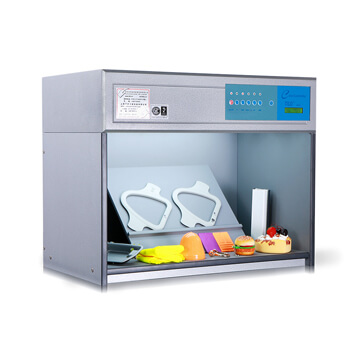
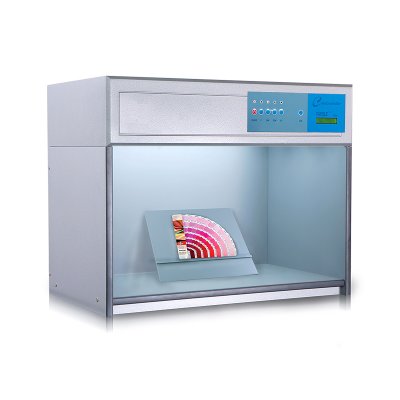
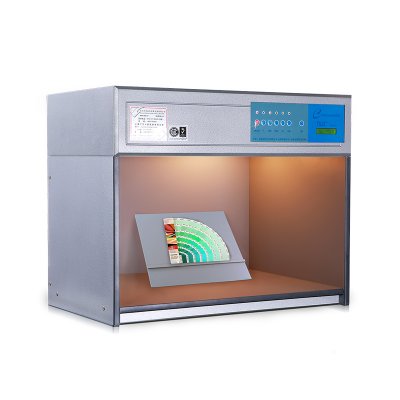
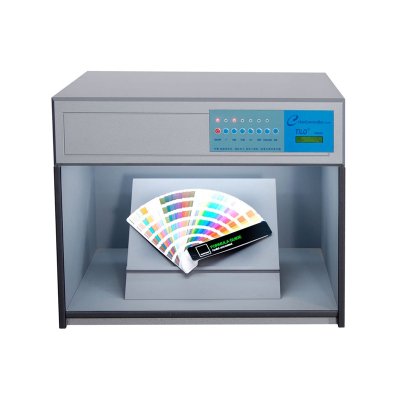
A light booth for color matching usually contains D65 (daylight), TL84 (store), A (incandescent) and UV light. LED may also be used in modern time for additional color matching.
A haze meter measures the light. It quantifies the measure of transmitted light across a material and the degree of scattered and diffused light.
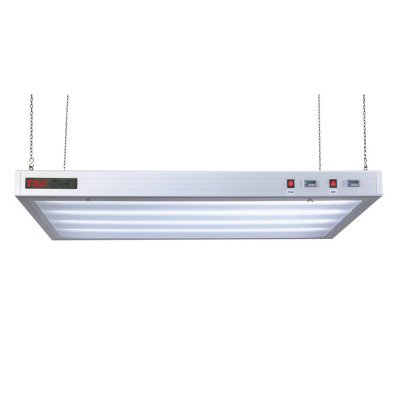
Replace when the total hours exceed rated life, decrease in brightness, or the color temperature shifts beyond tolerance.
Many people might answer "with the human eye", but this is actually not comprehensive. The human eye cannot accurately distinguish the colors of similar objects. Furthermore, everyone's perception of color varies. Therefore, people have developed color measurement tools based on the CIE color system.
Currently, there are two main types of commonly used colorimeters, as follows:
Colorimeter - It is an ideal choice for quality control (QC) on production lines, used to detect color differences.
Spectrophotometer - It is suitable for the development of color characteristics and color analysis in laboratories.
a. When the colorimeter is disconnected to the PC, "Connection Timeout" will occur. At the moment, you have to check whether the USB cable is well connected the colorimeter and the PC. Then you can re-plug the USB to try out.
b. After ensuring the colorimeter is connected to the PC with USB cable, turn on the colorimeter and enter the main menu. Select "Comm" and press "Enter" key to start communication.
c. Turn off CQCS3 software, and reopen it.
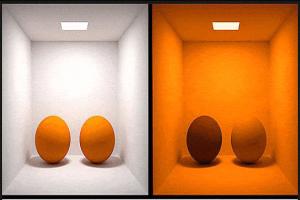
When detecting color differences, the first factors to consider when selecting a light source include its stability, directionality, lifespan, and the effectiveness of the ultimately obtained spectral curve. The illuminant of a colorimeter is a fixed bulb, such as a tungsten lamp,LED light or a long-life xenon lamp. However, for the same color sample, the results displayed by the instrument vary under different light sources. This is because different light sources cause different absorption and reflection of light on the sample, leading to differences in how both the human eye and the instrument perceive the color.
In general, the D65 light source is used in the application of coil steel inks for construction. The D65 light source is equivalent to average daylight. Most coil steel inks for construction are used outdoors, and sunlight is regarded as the standard light source in outdoor environments. For household appliance coil steel inks, due to their usage characteristics, they are mostly used indoors. Therefore, the A standard light source is adopted for color measurement of samples based on indoor lighting conditions. The A light source is a carefully specified tungsten light source. Other light sources, such as fluorescent light sources, can be used in many types of applications. For example, some textile factories use fluorescent light sources. Therefore, a reasonable light source should be selected as the mutually recognized measurement method based on actual usage conditions and user requirements. Once agreed upon by both parties, color measurement must be conducted under the same conditions. This helps reduce unnecessary systematic errors and human errors, achieving the optimal consistency in color measurement.
The 3nh high-precision spectrophotometric colorimeter adopts a combined LED light source with long lifespan and low power consumption, which includes UV (ultraviolet) and UV-excluded options. This design can meet the color difference detection needs of different users and supports the selection of multiple light source modes.
Discuss your project with one of our product specialists:
0086 755 26508999We respond to quote requests within 1 business day.
service@3nh.comSubmit a demo request for the product you're interested in.
Get a Demo