Home>Resources>Product NewsComplete Plastic Color Difference Control Guide: Precise Control from Source to Finished Product

Complete Plastic Color Difference Control Guide: Precise Control from Source to Finished Product

Keeping color uniformity on plastic products is more significant as it might seem from the start. Technical aspects of the production process may be difficult for the consumer to understand, however, a noticeable inconsistency in color is a straightforward cause for complaint. Whether it be a color that is a bit darker than the rest, an underwhelming glossy finish, or a slight change in color. Damaged trust can lead to product complaints, shipment rejections, and trust loss. For producers, color difference is not just a simple visual problem, it affects their costs, reputation, and future partnerships with customers.  


This is the first of several installments that aims to address the control of color difference in plastic, in the most practical manner under realistic production circumstances in order to stabilize the color consistency throughout the entire system, from the selection of the raw material to the shipping of the product.  

Key Impact and Concepts of Plastic Color


Difference in plastic color is the difference between the standard color and the color produced, and in industrial manufacturing, difference is regarded and not just seen.

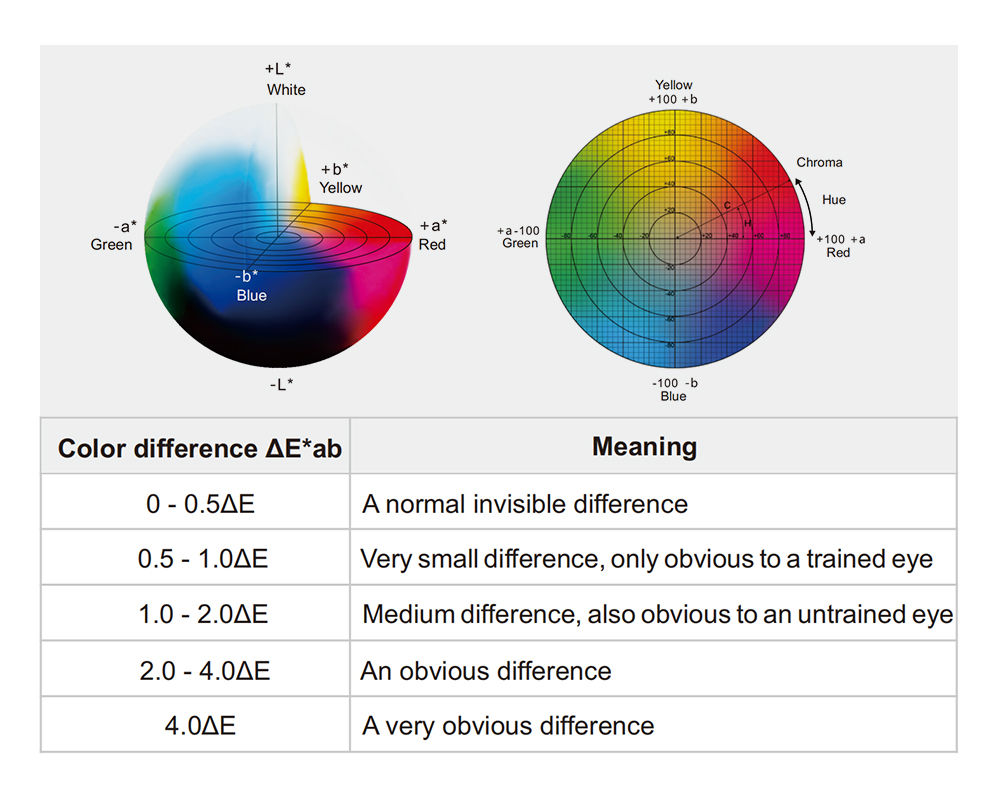
Basic Color Space Theory  


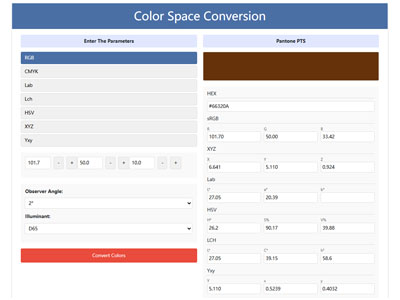
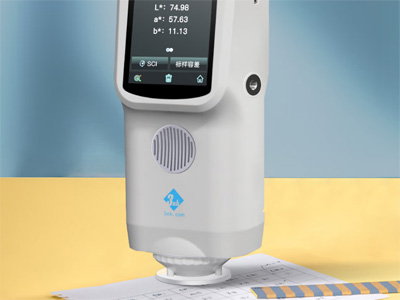
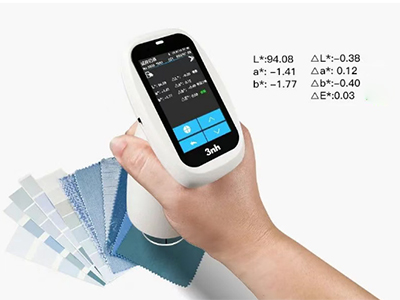
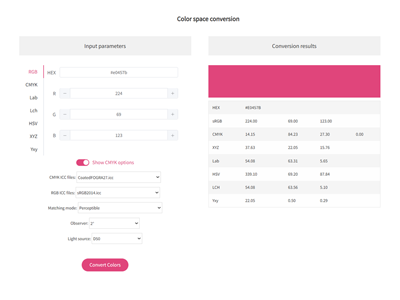
The difference in color in plastic is often evaluated from color space systems, which include CIE Lab. Some of the systems include;  


  L represents lightness, from black to white.  

  A represents the spectrum that contains red and green.  

  B represents the spectrum that contains yellow and blue.


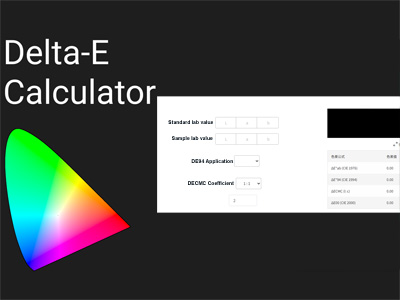
A common measure for color difference is ΔEab. This tells us how closely a sample matches a reference. The greater the ΔE value, the greater the difference that is perceptible.


In manufacturing:


 ΔE ≤ 1.0 is considered very tight control.

 ΔE between 1.0–2.0 is ok for many industrial applications.

 ΔE above 3.0 is visible to the naked eye.


Some subjects may depend on clients, the industry, or type of products.


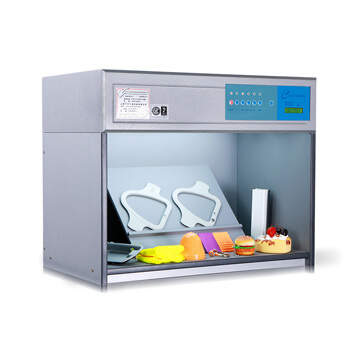
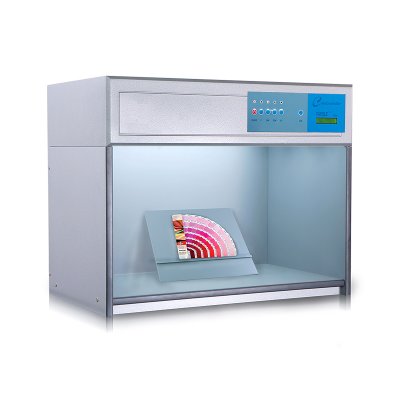
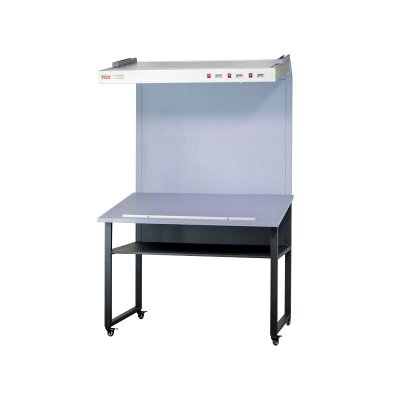
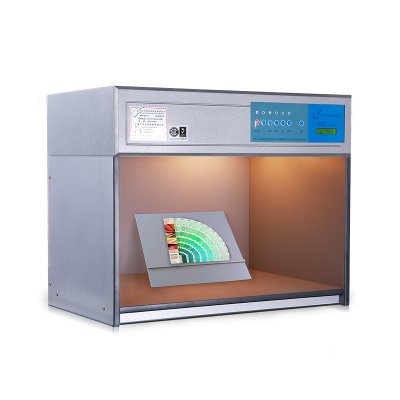
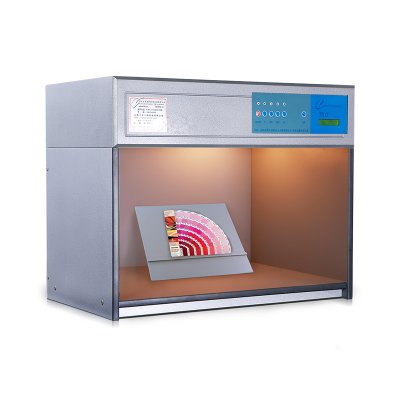
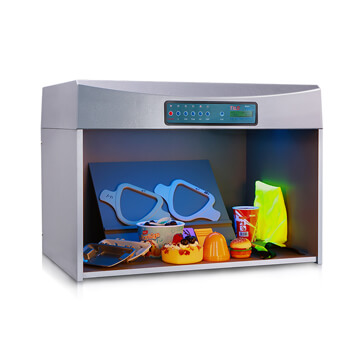
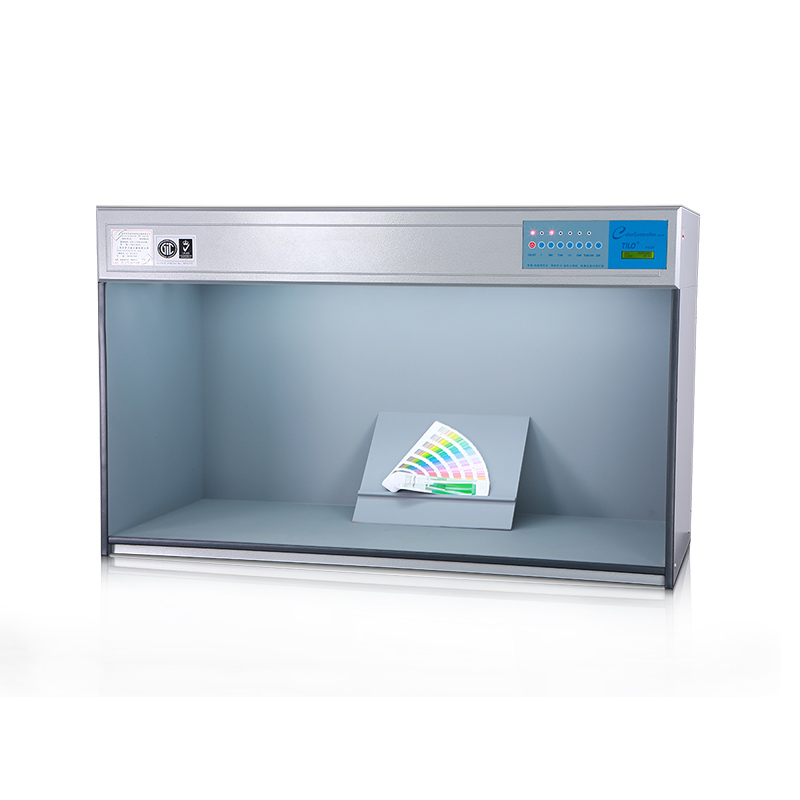
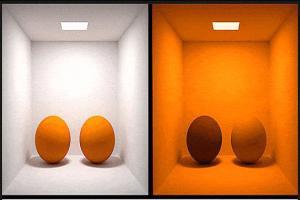
Different lighting, the light’s angle, and background all affect how we see colors. In case of visual examination, all these elements create variances. This is why it is important to have a standard for the light source and a formal testing method. Without these, reliance on visual inspection alone is highly unsatisfactory.


All the above are intended to avoid disputes that are primarily based on visual inspection. It helps to establish a “common language” among the customers, quality assurance, and production.

Key Factors Causing Color Difference in Plastics


The factors that lead to color differences in plastic are not random. It is the result of:


 Variation in raw materials

 Inconsistency in the dispersion of the pigment

 Fluctuations in processing temperature

 Variation in injection speed

 Variation in machines

 Changes in the environment


Each of these factors may individually lead to color differences, but in combination, they can lead to color differences in plastic that are clear and discernible.


The impact of difference in colors can be serious as this can result in:


 Customer complaints

 Rework or scrap

 Damage to brand image

 Increased production costs


Managing color difference in production isn't as easy as it may seem. It is a process that involves more than one step.

Major Causes of Differential Coloring of Plastics: From the Source to Production


To manage the differential coloring phenomenon, the causes of this phenomenon must be addressed as such, starting from the supply chain, including production.

The Variation in Raw Materials (The Source of the Color Differentiation)
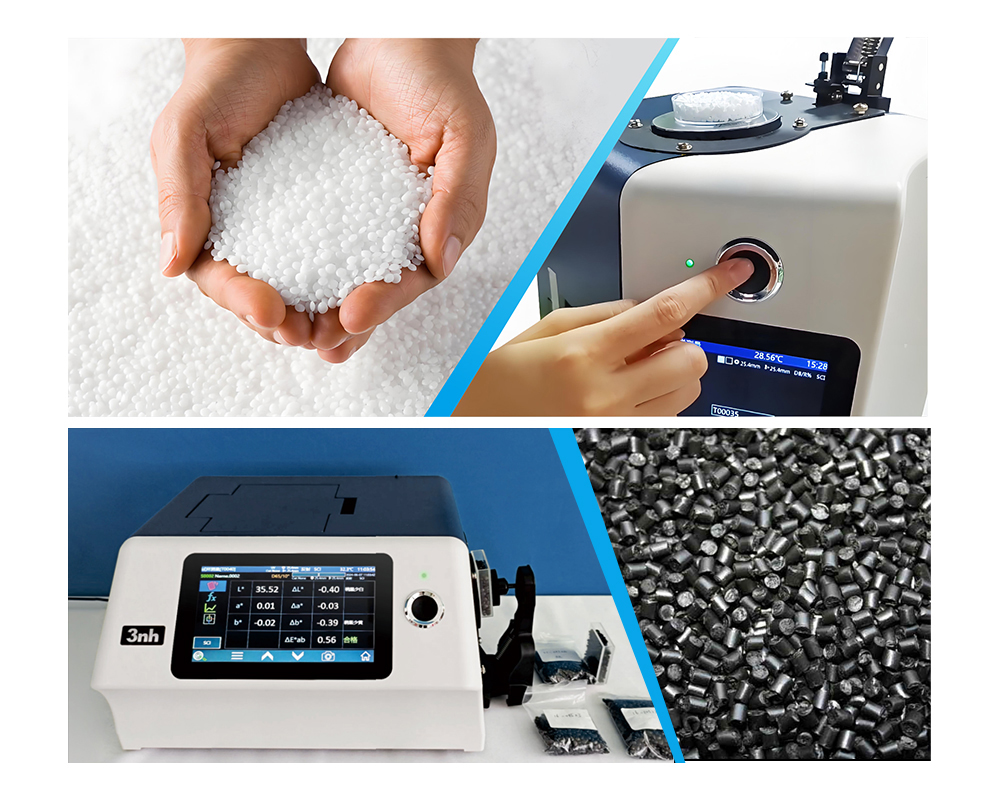
 

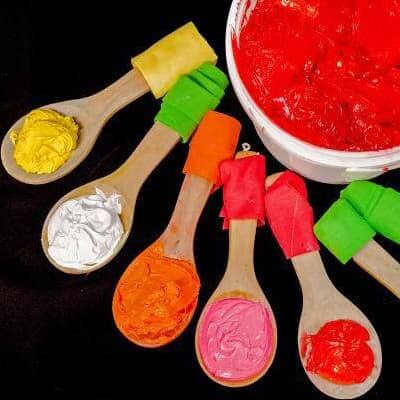
The raw materials are the basis for the theory of color stability. Even in the absence of the added pigment of a natural resin, it has its own base color. Different batches of ABS, PP, or PC may exhibit slight variations in transparency or brightness. These variations are more pronounced, especially at the level of the Masterbatch.


The color masterbatch may also exhibit variations. When the concentration of the pigment is not uniform, there may also be a difference in the color of the masterbatch, owing to the difference in the quality of dispersion. Incidentally, pigment suppliers may change the raw pigment source without notice, which can cause a shift in color.


Storage conditions can also influence coloration. Absorption of moisture in hygroscopic polymers (for example nylon) can result in changes in processability, appearance, and surface. The process of mix resins (for example, a different grade of resin) without proper testing can contaminate the resin and cause processability issues.


This is why factors like the inspection of raw materials is critical and should not be skipped. Every shipment of raw materials should be evaluated using a measurement standard. If the base resin shows a deviation from its expected norm, the issue can be resolved by adjusting the production schedule prior to the large-scale molding process.

Variability in Processing Technologies (Most Important Production Parameter)


Variability in the processing of raw materials can be an issue, even when the raw materials themselves are consistent and uniform, and can create problems with the final coloration that is desirable in the product. Injection mold temperatures, speed of the screw, holding and cooling times are all factors that help create the desired coloration by means of the pigments and the plastic.


For instance, in the case of the barrel, if temperatures are too high, a slight yellowing may occur and pigments may be lost. If this is the case, the mixture may be too cold, leading to a lack of mixing and an uneven coloration. If injection speeds are altered, this may also change the gloss levels, and with meeting the desired gloss, the color may also be altered.


The primary concern in busy production environments is that mold design and processing technologies do not remain consistent. Process Variables may be purposely altered to improve molding, or to reduce flash, all with disregard to the color of the final product. These changes, small on the surface, lead to drifting in the production of colored plastics.


In the production of colored plastics, process variables that do not change are critical. To ensure the expected color is achieved, when process variables are documented and a set of variables is established, mold design is not altered in any way as color shift is documented.

Equipment Problems (Often Ignored Problems)


In color stability, the state of the equipment is important, even if it doesn't look like it is. Mixing efficiency is affected by a damaged screw. Temperature sensors that are not calibrated can provide incorrect information. The heating bands may not provide even heat.


These factors are not guaranteed to cause an immediate malfunction, but over time, they take a toll on the equipment's dependability. Consider the barrel heating that is not even. It can cause overheating in certain areas which changes the behavior of the pigment. The operator may miss it, but the color variation will be obvious to the rest.


Simple things like calibrations and maintenances are often overlooked. Failing to implement preventive maintenance on equipment and systems that control the temperature and components of mixing is a most certain way to end up with erratic colors. Machines that are stable will give you colors that are stable.

People and Environment


In most situations, human error is a thing that can happen, even in an industrial setting, but there are ways to reduce it. An operator can over or under dose a masterbatch, not dry completely, or mix for an inconsistent time, and all of these can cause a change in color. Additionally, if there is no clear reference, it is likely that different operators will have different opinions regarding the color.


A high level of humidity can change the way a material behaves, and this is a way that the environment can have some effect. Poor lighting in areas where colors are compared can also lead to different opinions regarding the color.


SOP and a well defined process will reduce reliance on individual factors. The goal of a well defined process is to eliminate ambiguity and focus on measurable outcomes, limiting reliance on personal judgement.

Picking and Getting Ready of Colorimeter  


Objective measurement is what separates the experts in the field of color measurement.  

Choosing the right tools  


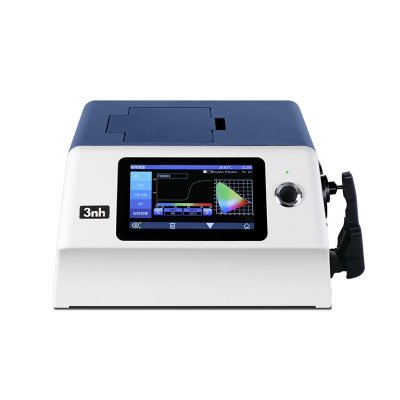
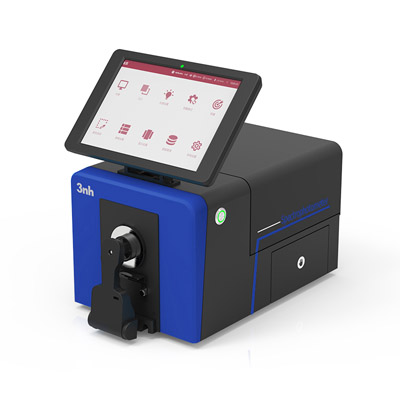
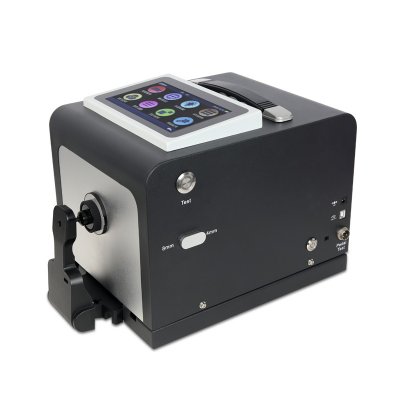
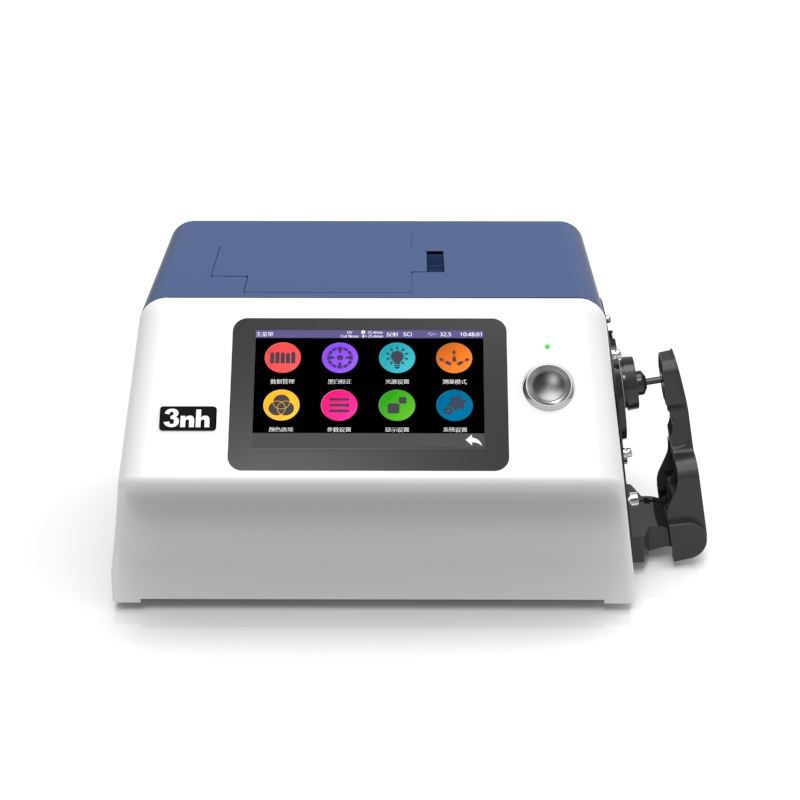
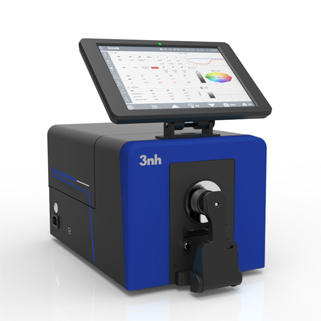
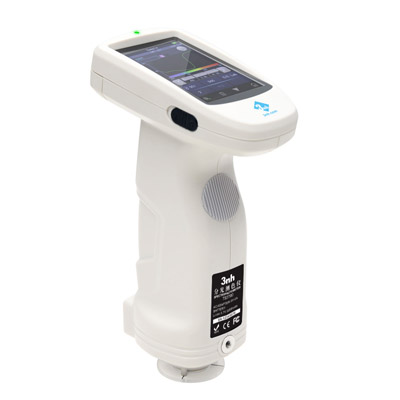
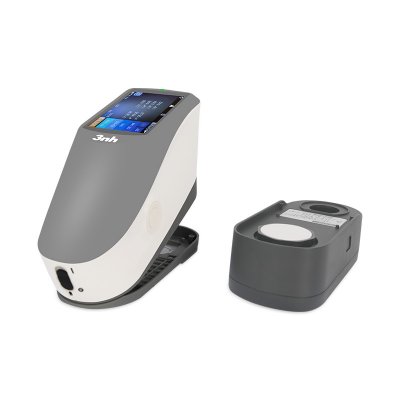
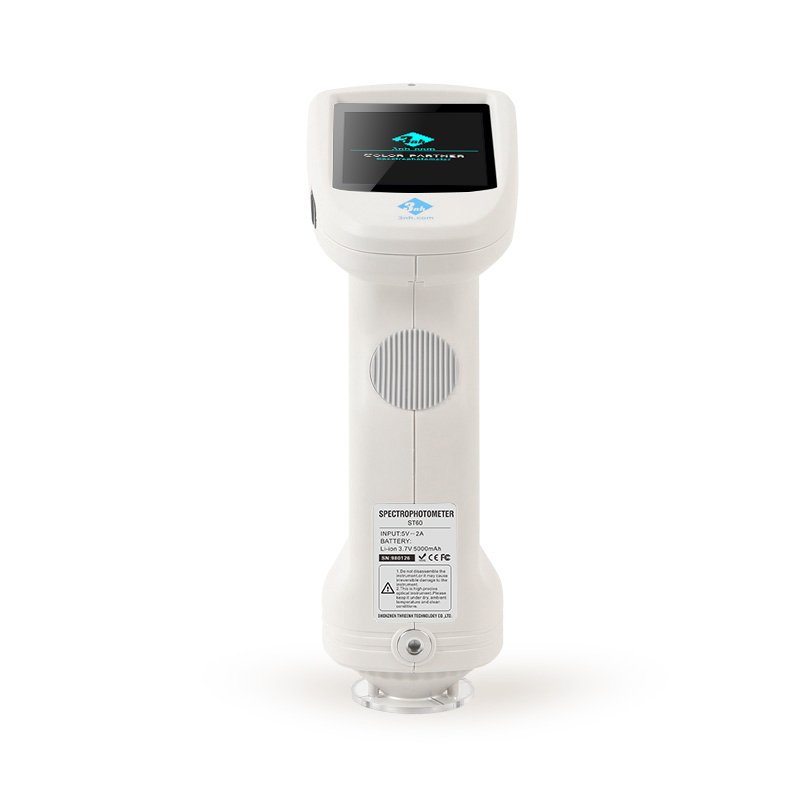
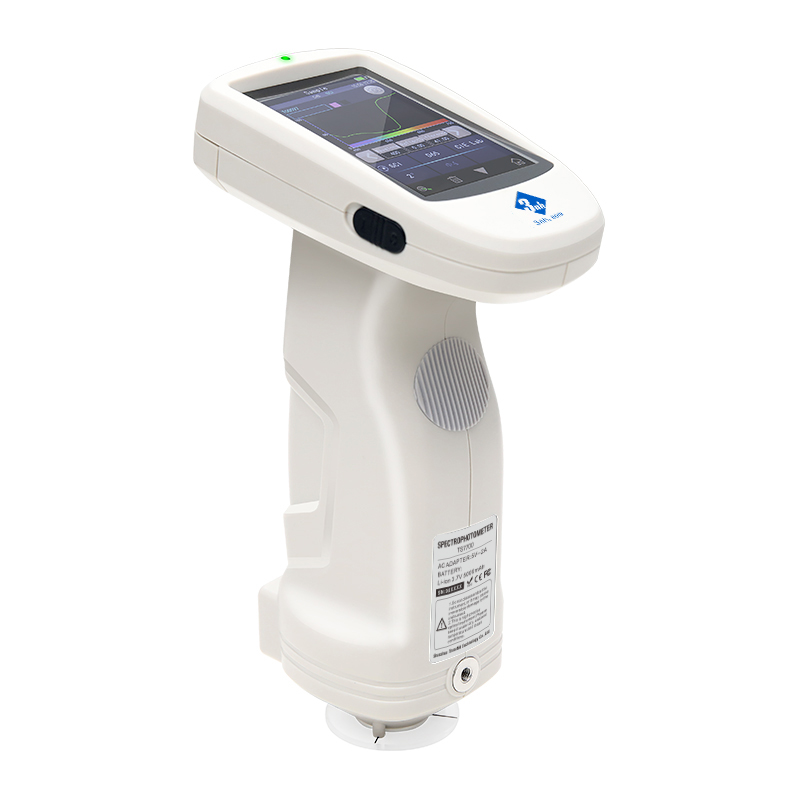
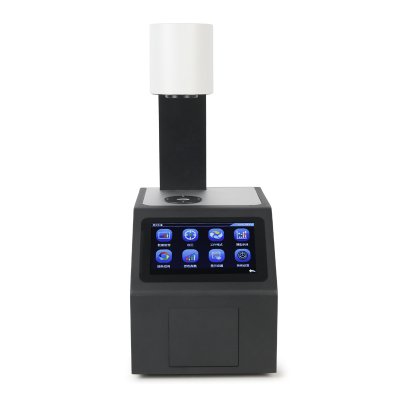
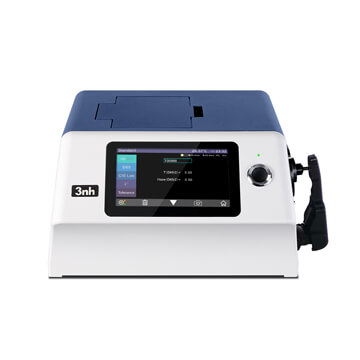
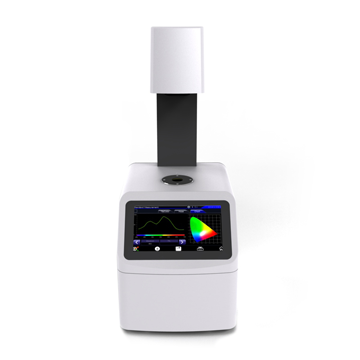
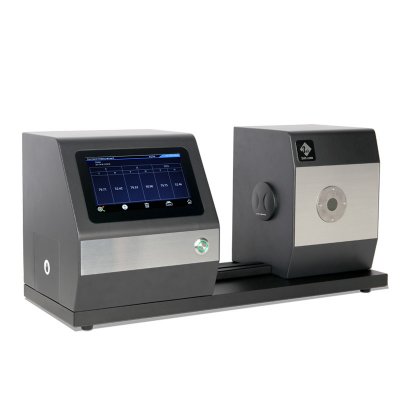
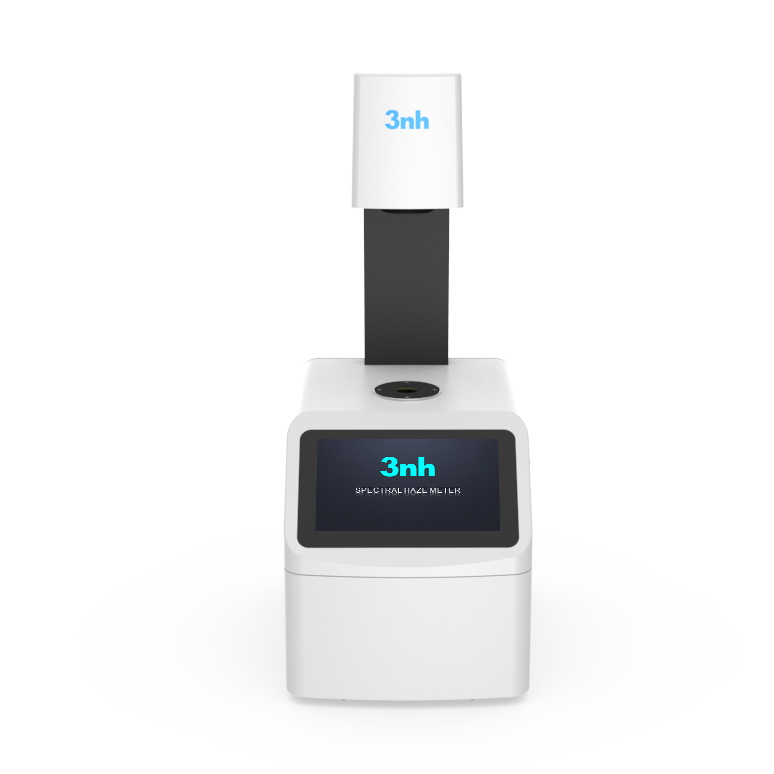
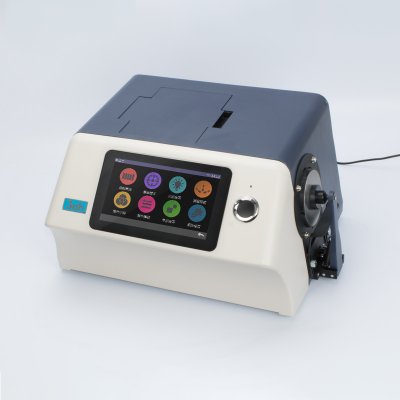
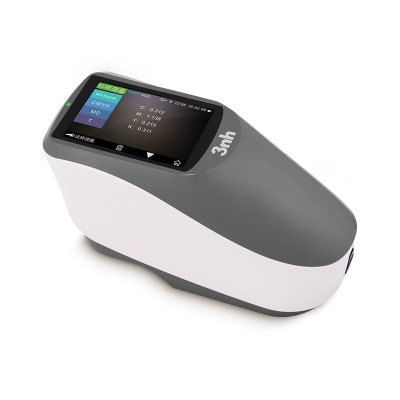
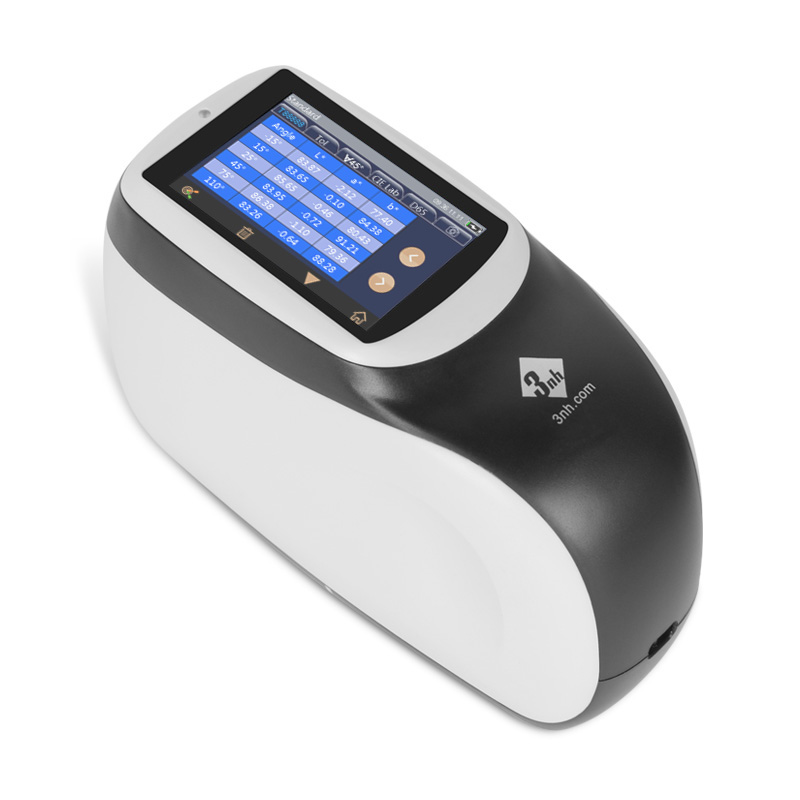
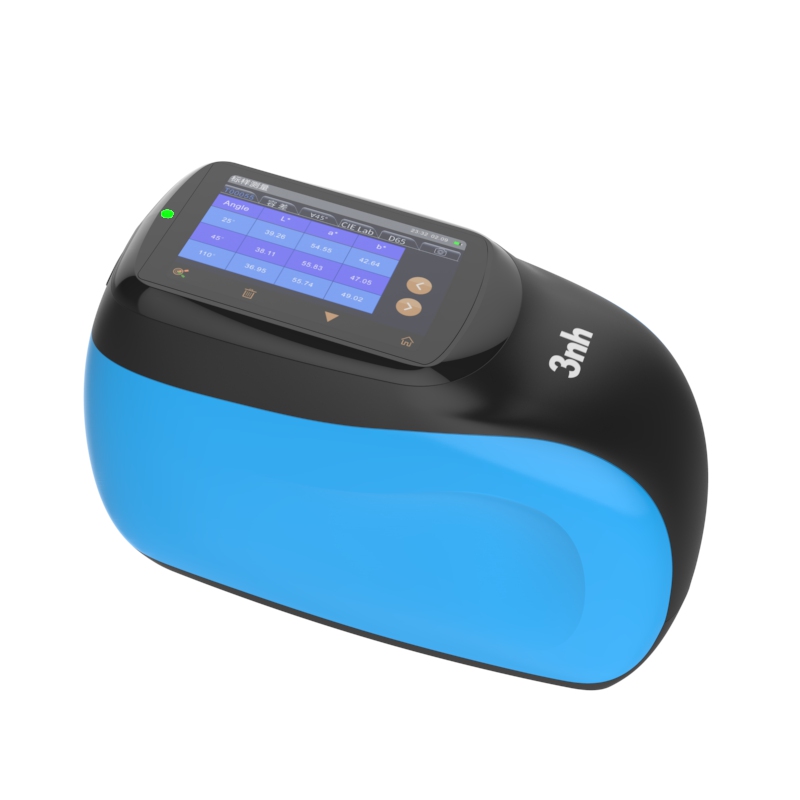
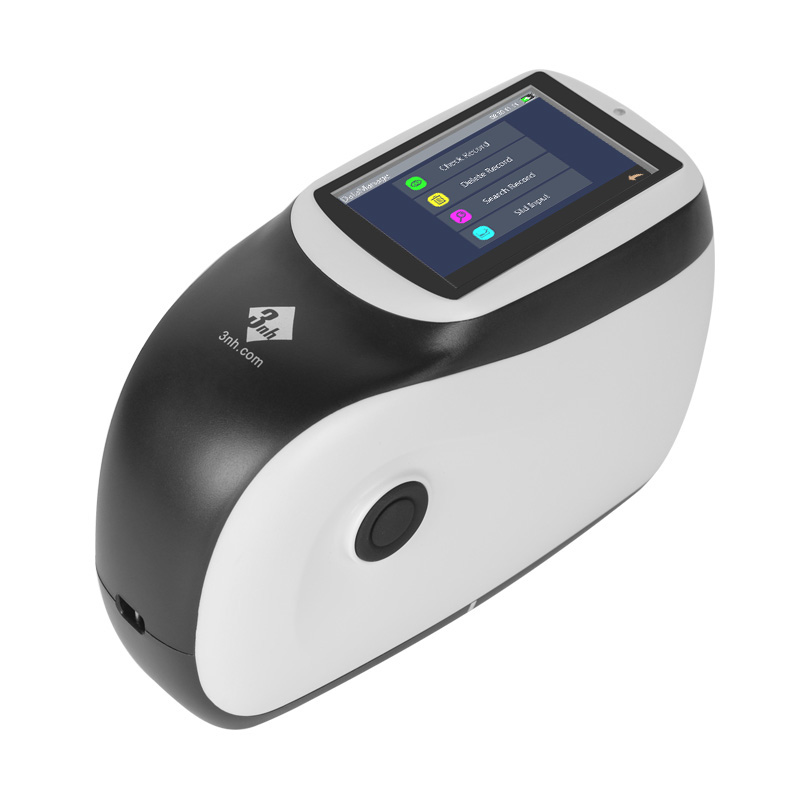
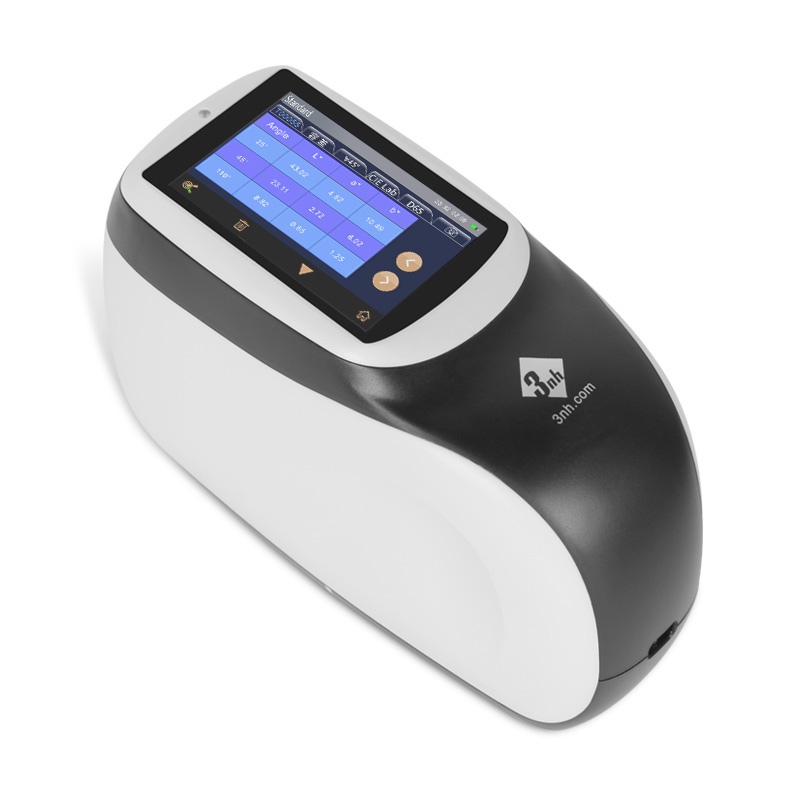
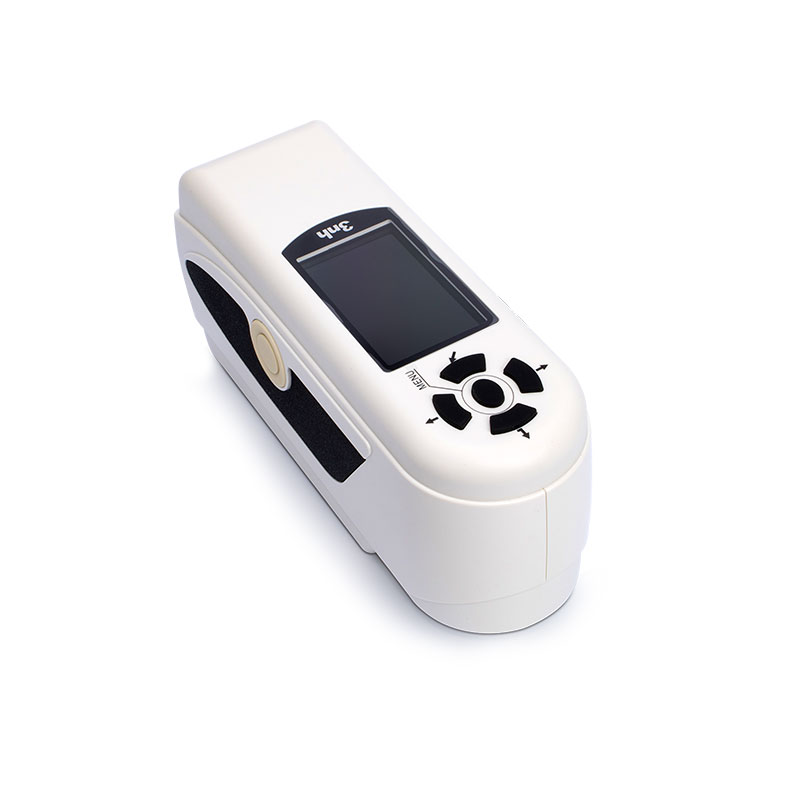
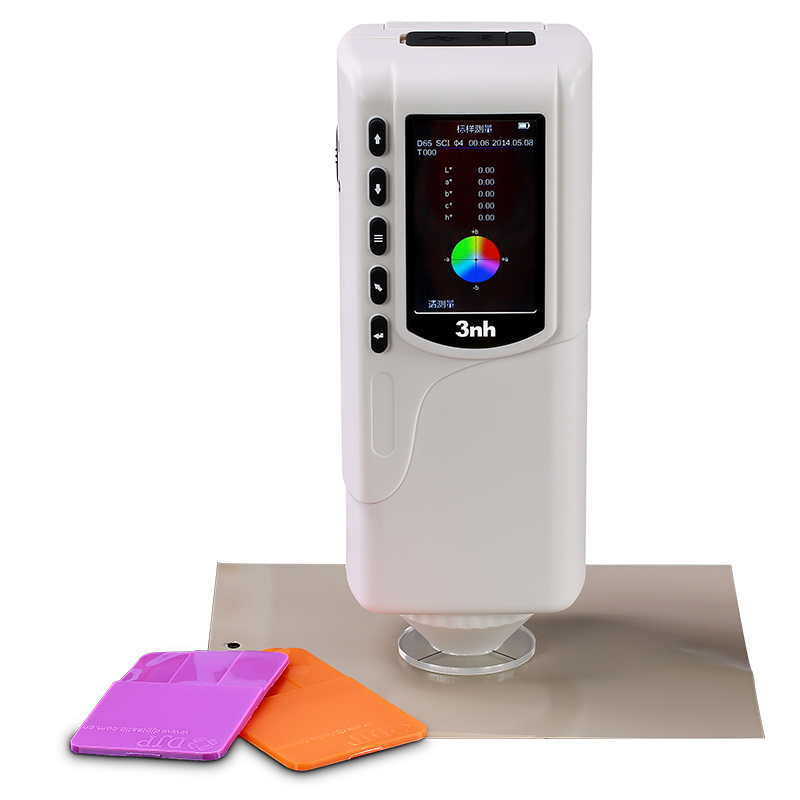
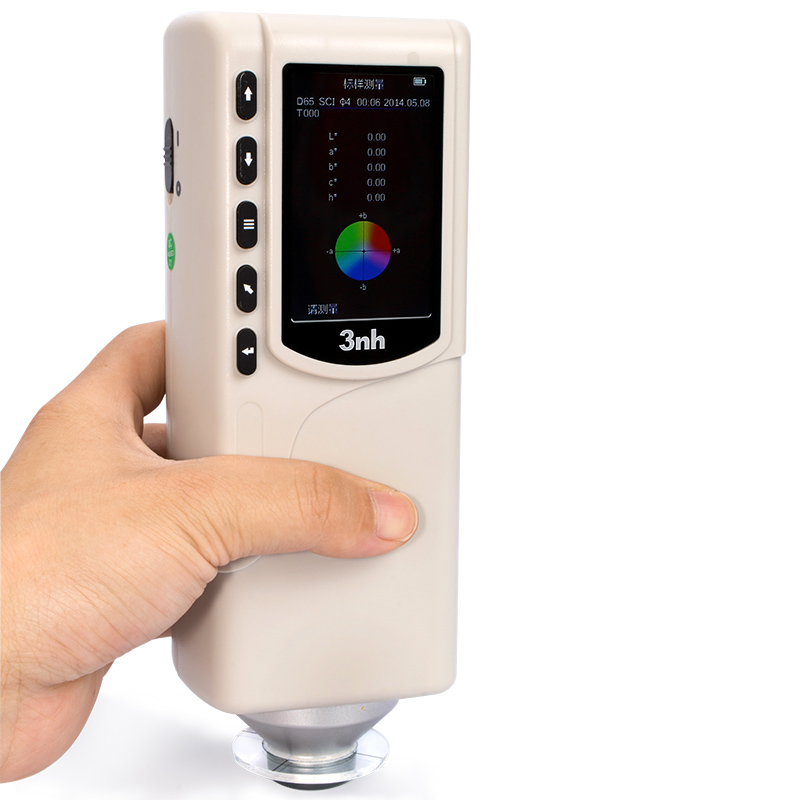
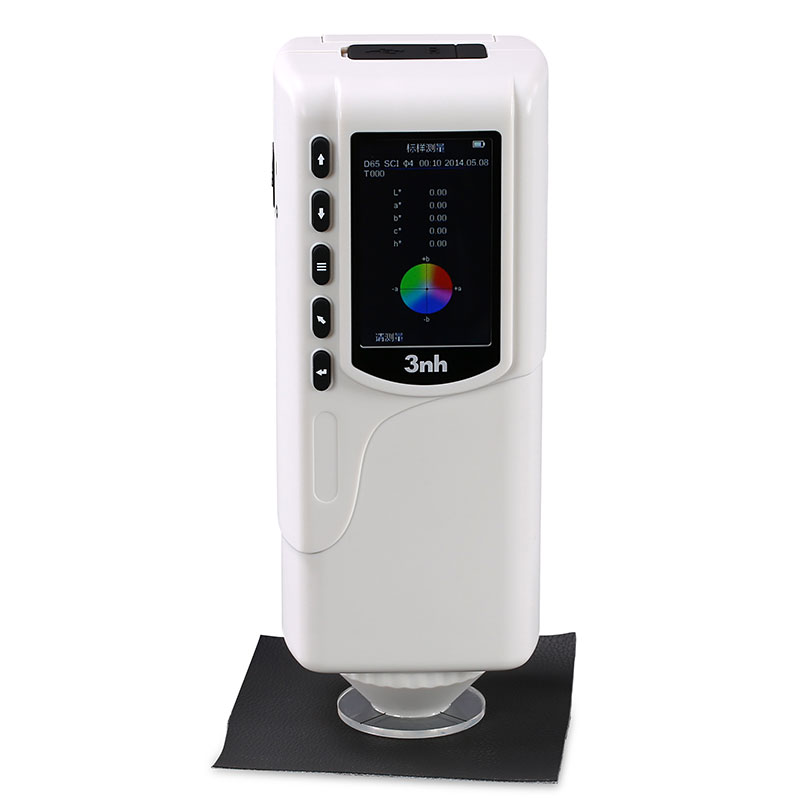
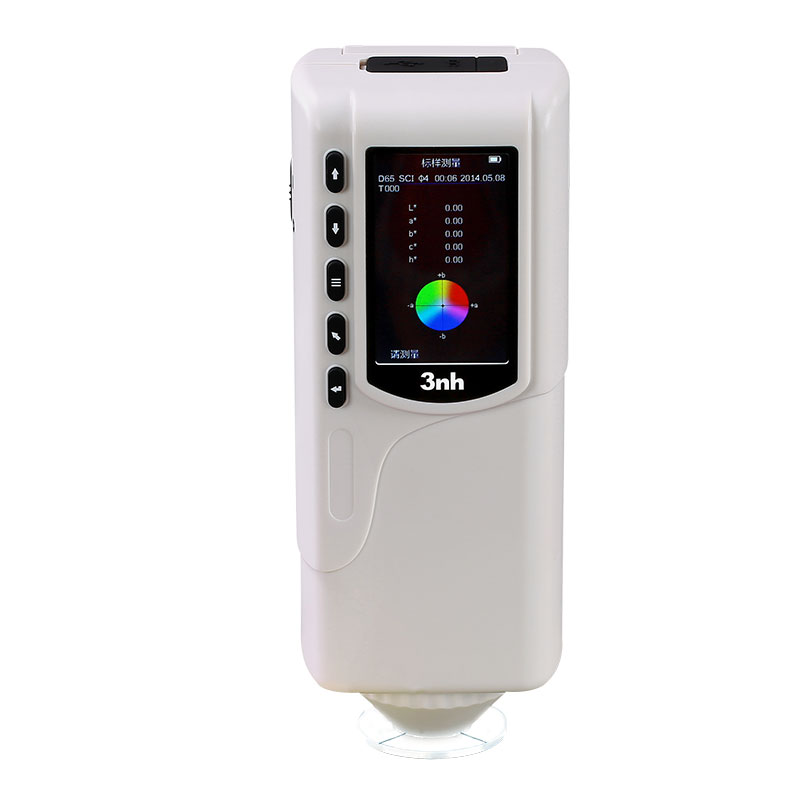
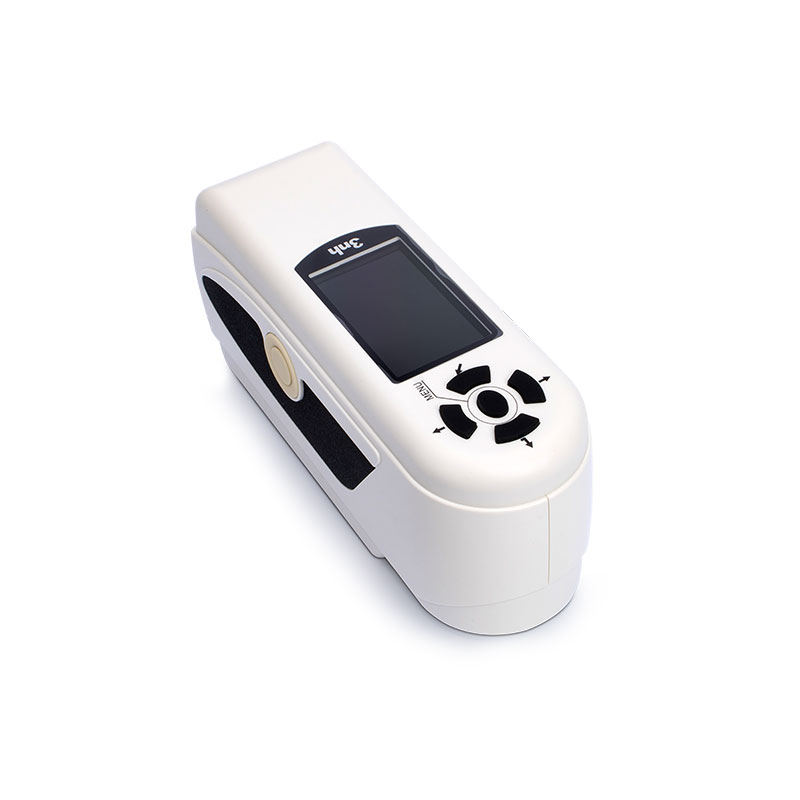
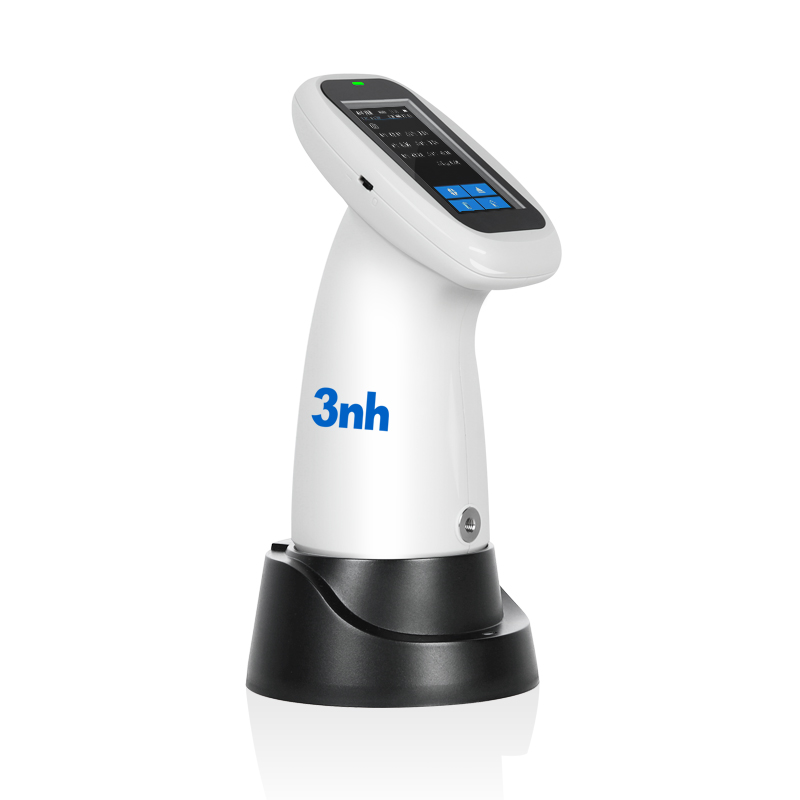
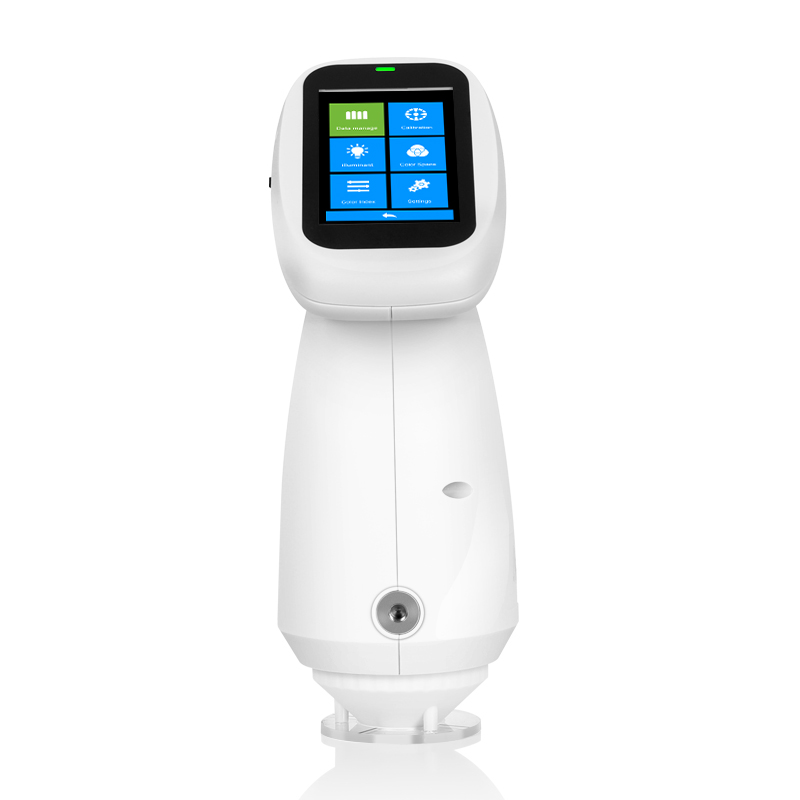
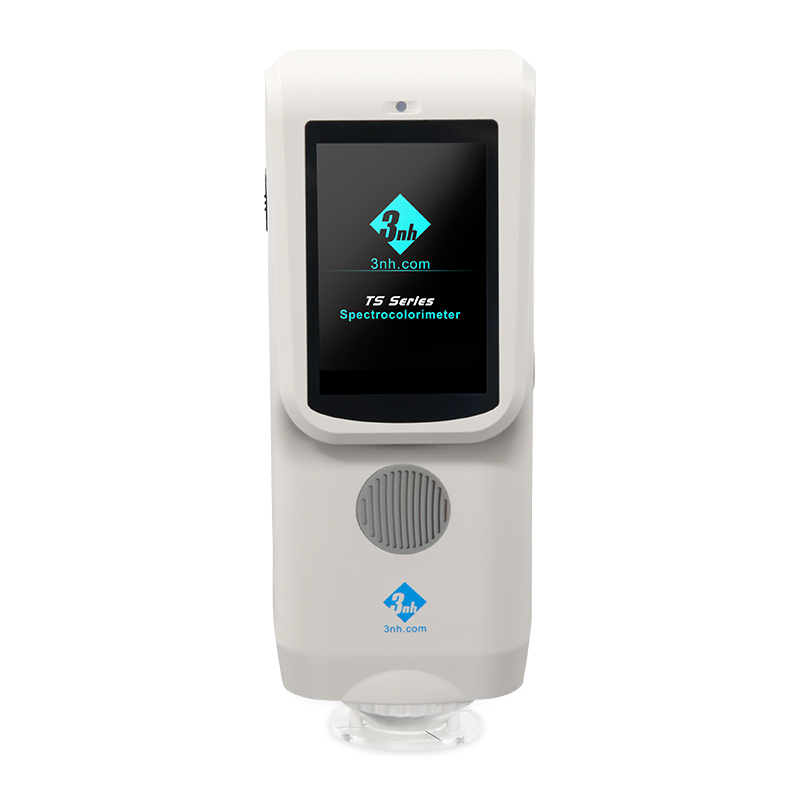
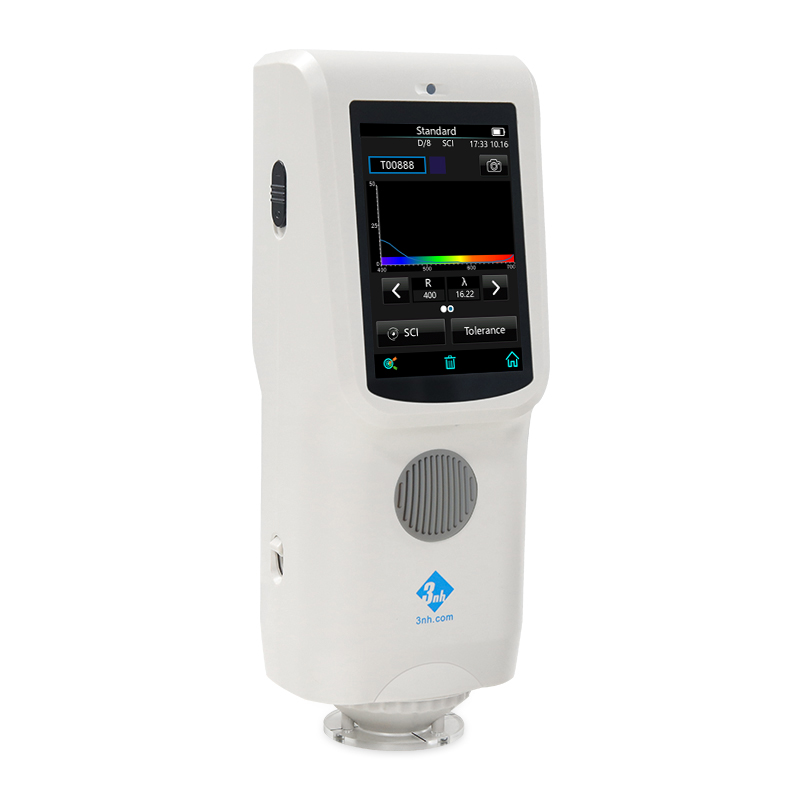
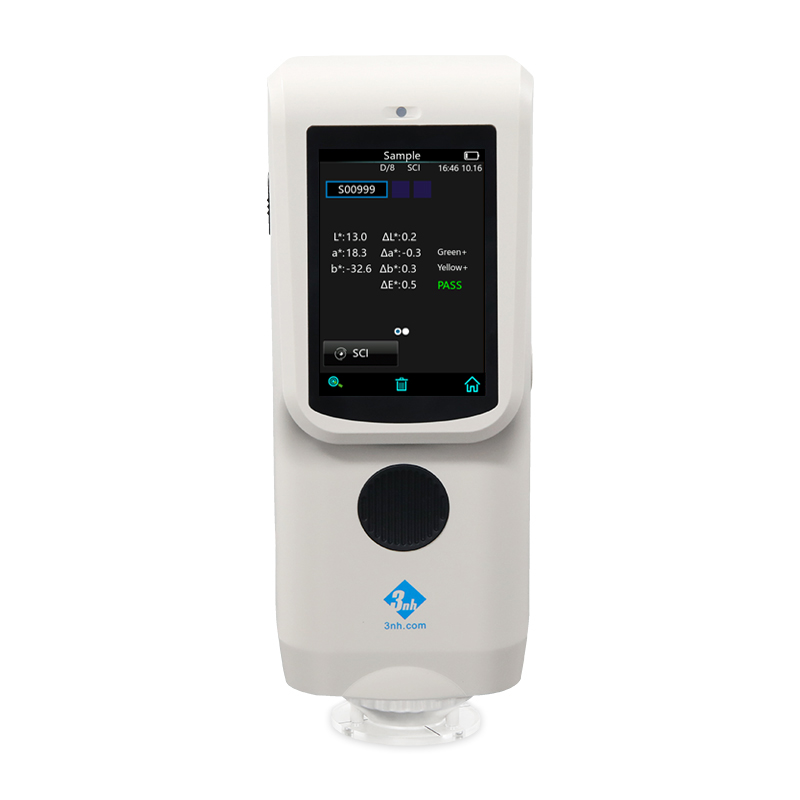
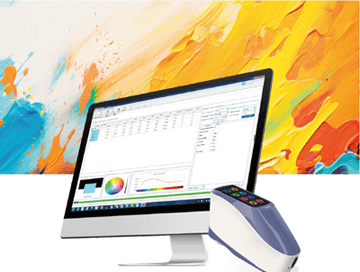
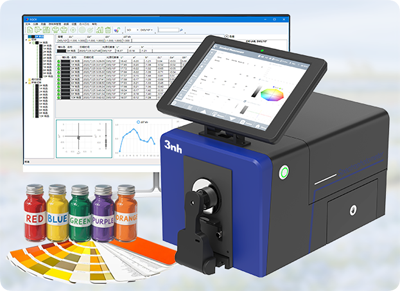
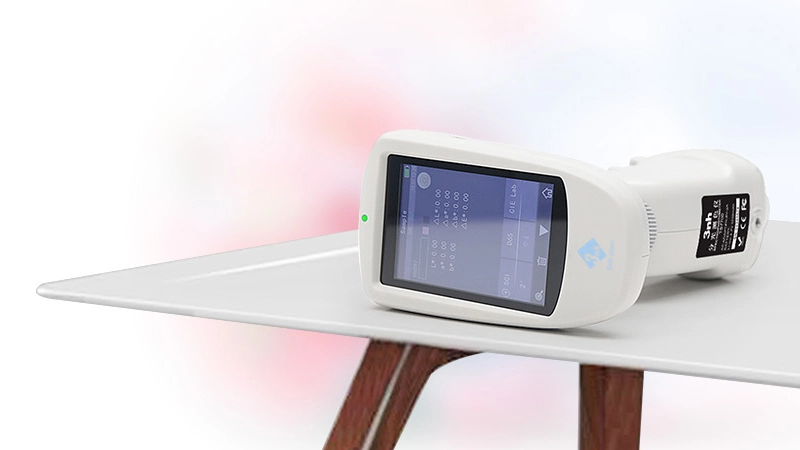
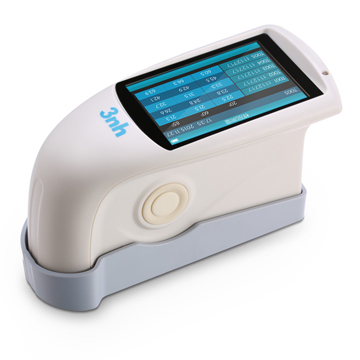
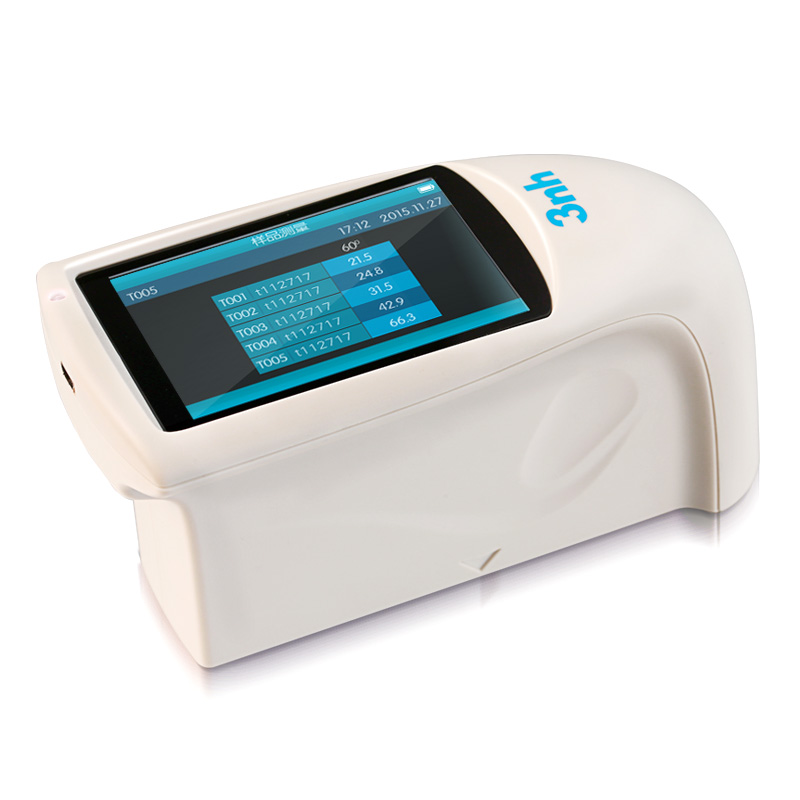
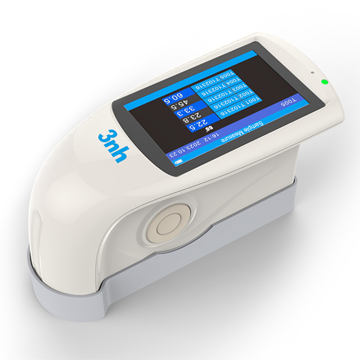
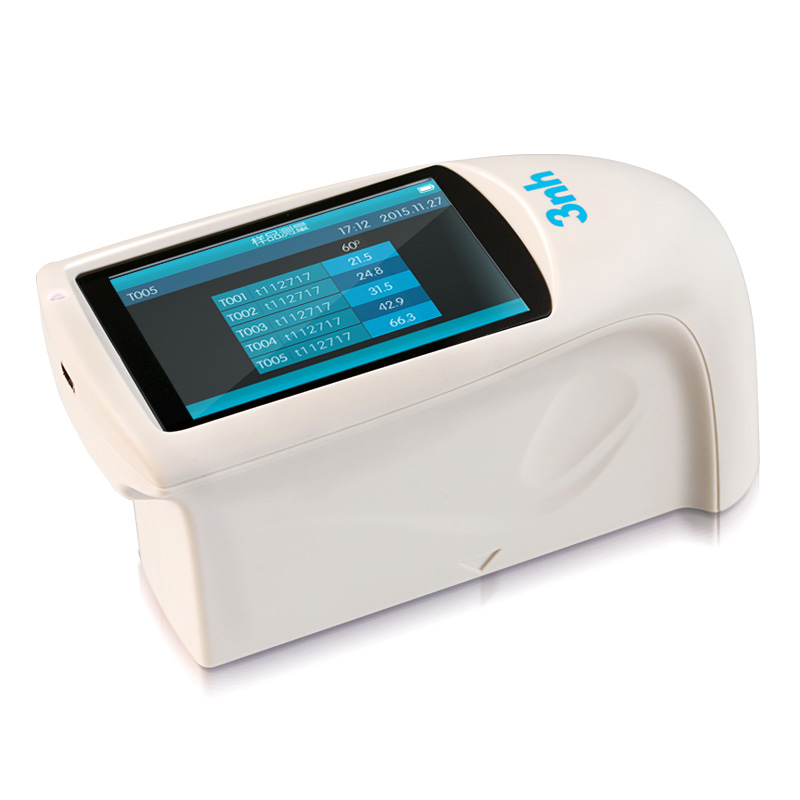
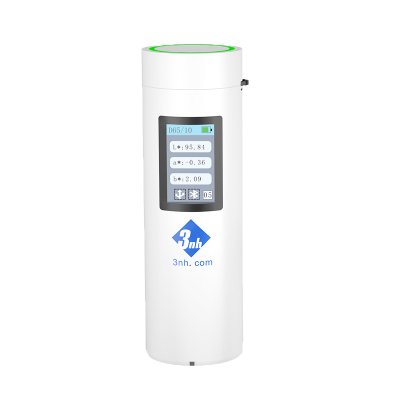
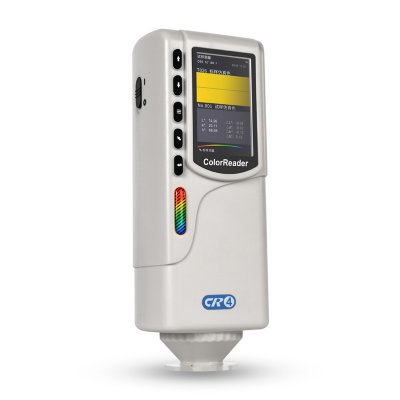
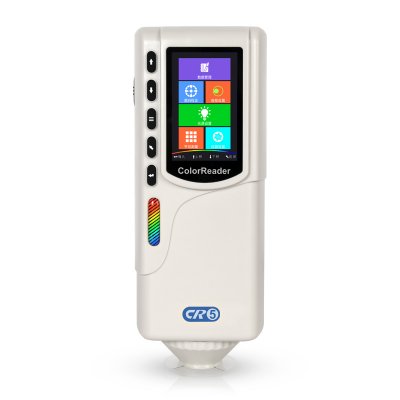
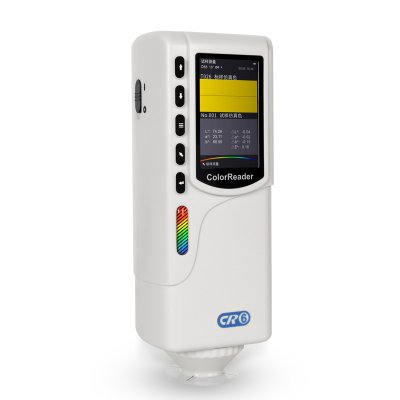
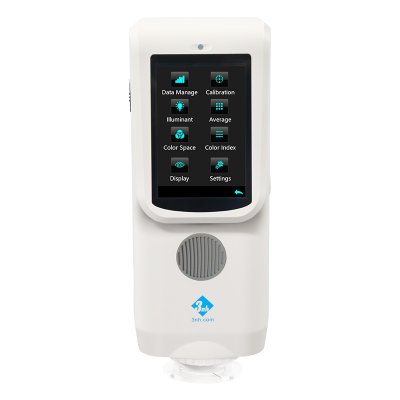
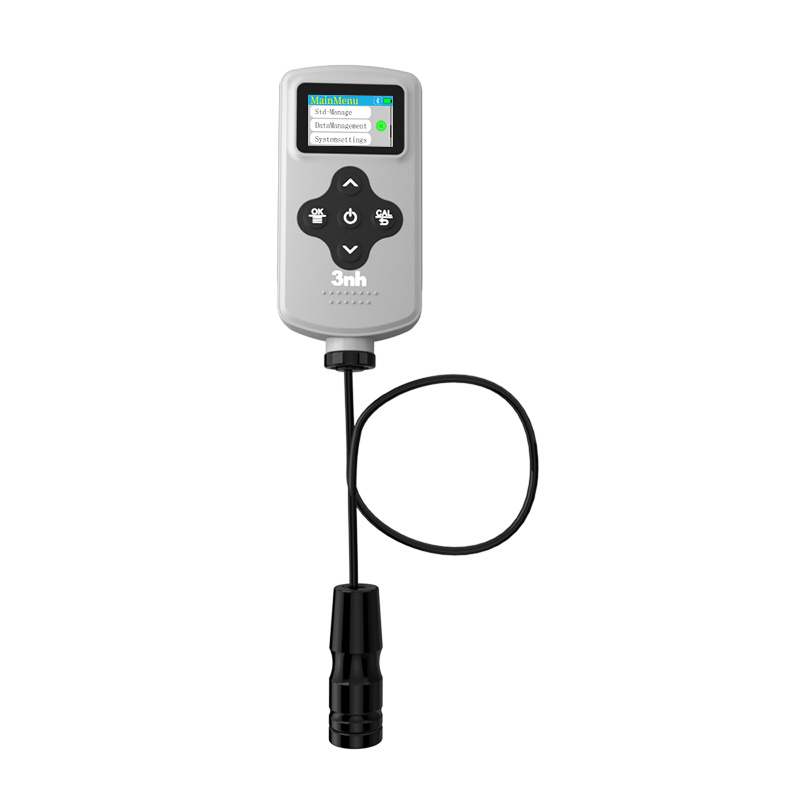
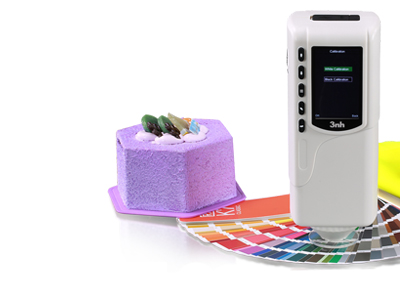
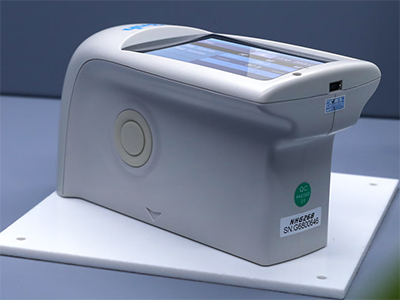
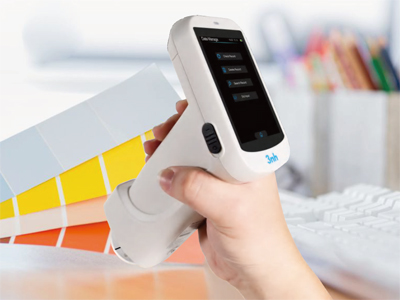
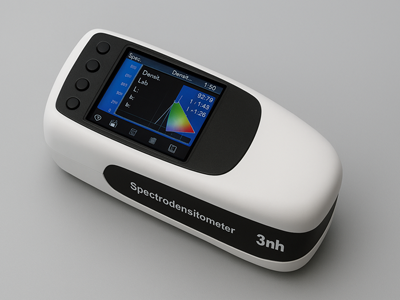
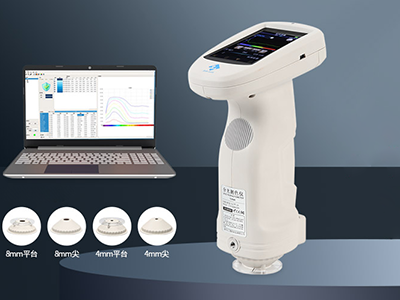
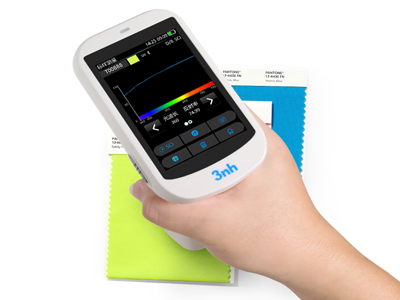
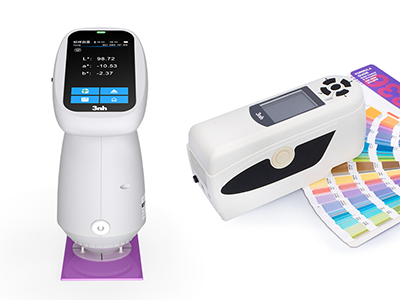
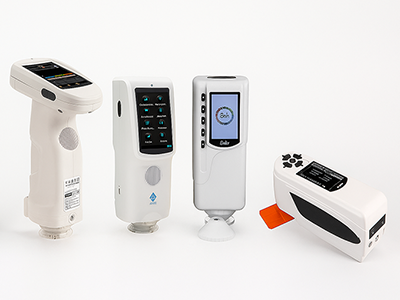
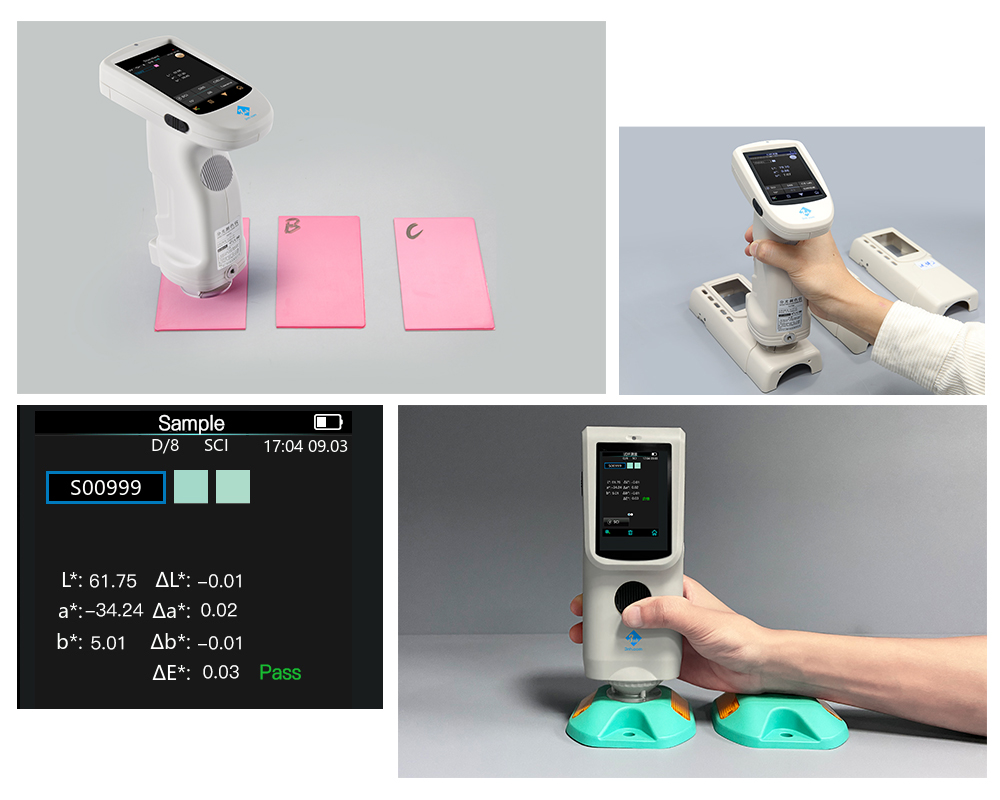
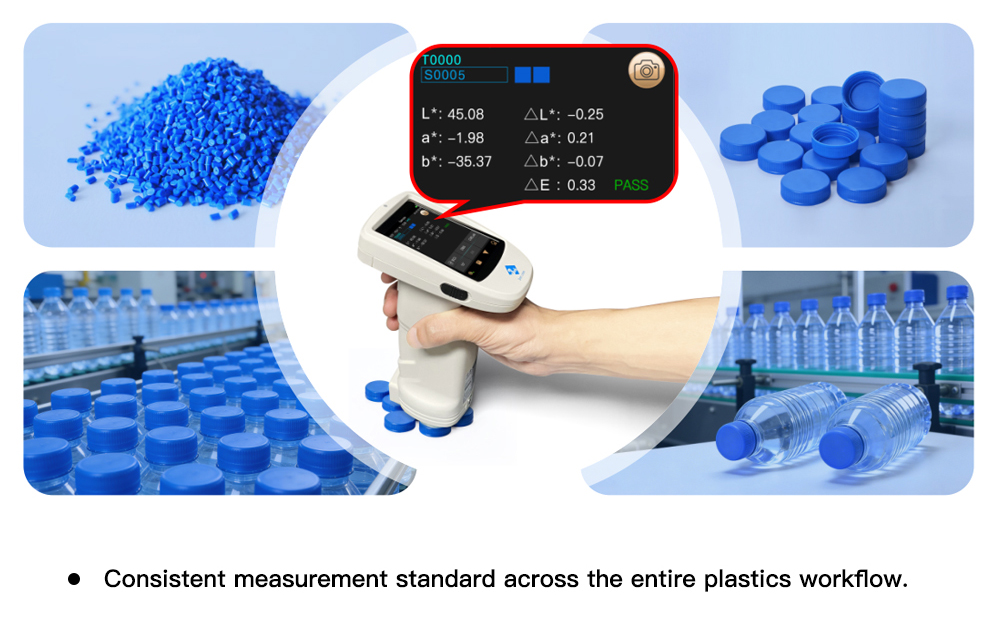
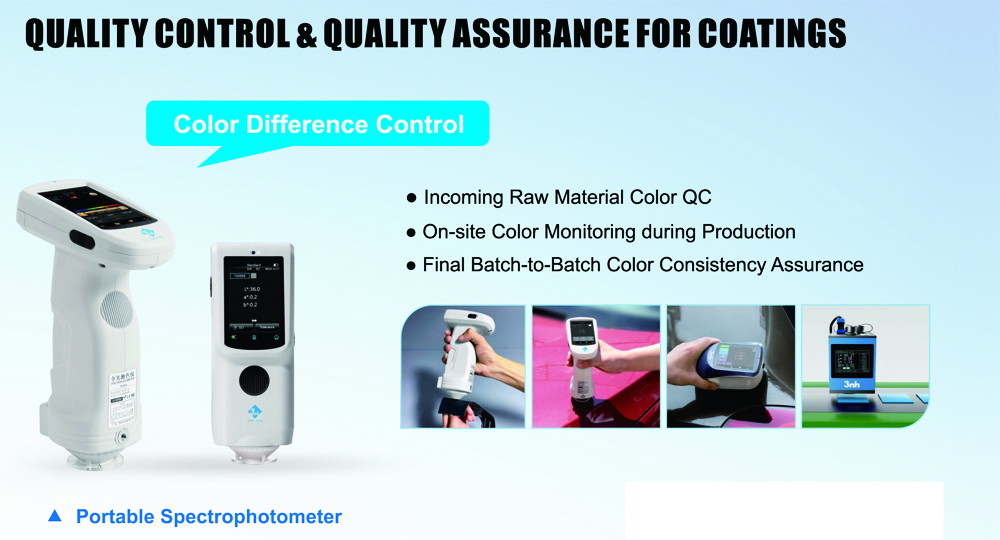
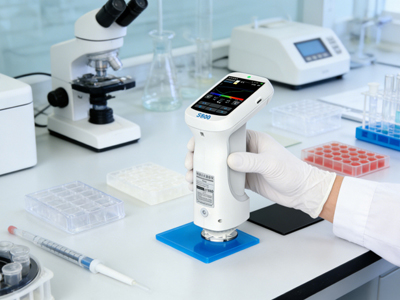
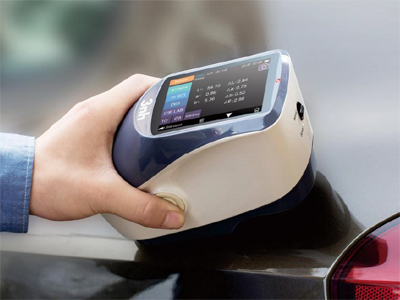
Choosing the right tools, including a spectrophotometer and a colorimeter, is essential for better measurement of color. The color measurement tool should be flexible and adjustable to the surface properties of the product. When measuring high gloss plastics, the measurement geometry should be designed to consider the reflecting influence.  


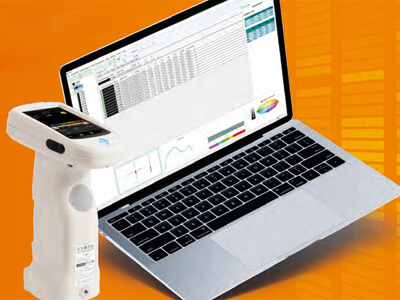
The Measurement should also incorporate appropriate optical geometry for high gloss and textured surface so as to acquire a representative measurement. The color measurement tool should also have a D65 and other standard light sources for simulating the daylight. For easy traceability, the measurement device should have data storage and export functions.  


Choosing a color measurement device based on low price may lead to a price increase for measurement in the future. This device determines the measurement accuracy for the control decision.  

Training of the personnel  


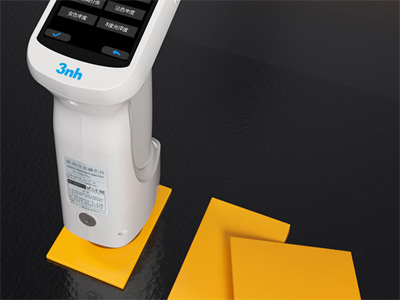
The measurement of the colorimeter should be correctly initiated taught. Before measuring, a measurement standard should be cleaned. The measurement should be taken consistently at the same positional coordinates and angles.  


Training of measurement will help in reducing the measurement variation. The measurement procedure should be documented to ensure compliance. The collection and aggregation of measurement data over a specified and distinct time will increase the standard of measurement.  

Important areas for control of color differences  


There should be control of color differences throughout the production process and not just at the end of production.

Raw Material Incoming Control


Incoming inspection is the first checkpoint for a batch. Each batch is recorded, with one example tested against a reference sample. By detecting a deviation early, adjustments can be made before mass production starts.


Proper storage and clear labeling mitigates batch mixing. Supplier performance records aid in evaluating long-term McGavock stability.

Pre-Production Adjustment and First Article Approval


Trial samples should be made and compared to the standard before mass production begins. Adjustments to the masterbatch ratio, if necessary, can be made to process parameters.


The first article approved serves as the reference for the batch. This sample must be physically preserved as a standard over time, detailed documentation of the parameters is required.

Dynamic Monitoring During Production


Monitoring color must continue after the first article. Issues can be identified early and become a problem if regular monitoring is neglected.


Shift-end checks can be useful, but periodic monitoring allows problems to be dealt with as production continues. If ΔE values show a gradual increase, the cause should be investigated. Early correction saves time and effort with over production and unnecessary later work.

Product Inspection and Shipping Control


In terms of shipping products, we must first conduct a random sample of the goods and check to see that all products are within the required limits as to the amount of goods that can me produced. All inspection is to take place in a room where lighting is controlled and placed in a manner that it is easy to see all the products.


Final Confirmation protects both the Manufacturer and the Customer. Should any issues arise during the inspection and determine that products have characteristics that should not exist in the products, the record of the production run makes it easy to trace the source of the problem.

Data Management and Abnormal Behavior


When the parameters of production are not provided in the system, color regulation is reduced to conjecture.

Data Management System


Each batch must have a control record that specifies the batch number of the raw materials, the parameters of processing, and the result of color measurement. The digital system allows to create a record of a batch and its parameters.


Data stored in digital systems is invaluable in predicting future events based on previous data. Deviations in color measurement of the same parameters and the same production machine can serve as a good indicator of the need to check and make corrections to the machine.


Data also allows to communicate objectively to the Client, and the availability of records makes the negotiations became easier and more professional.

Abnormal Behavior Management


When a change in color is noted, it is important to manage the process to halt production of the goods, if the shift in color is greater than the stated parameters. All goods that exhibit the abnormal change in color must be Secluded. An inspection must be carried out, and all materials, parameters, and condition of the production device must be examined.


When all the necessary corrections are made, it is necessary to measure the color of the raw material to ensure that it has returned to normal. Recording the entire process of corrections makes it possible to prevent its repetition.

Common Problems Classification and Solutions


The same colors tend to produce the same defects.

Color Variations Due to Raw Material Changes


In the case where an entire batch of product is slightly darker or lighter, it is usually due to raw material variation. Deviations of this sort can usually be corrected by small adjustments of the masterbatch ratio, but this can be a risky endeavor if the ratios are adjusted without testing.


In this case, preventive trials before changing the batch of materials are safer than correcting large-scale defects afterward.

Color Variations Due to Changes in Processing Parameters


If there is a gradual drift in color during a run, this is usually caused by an unstable temperature or an unstable pressure. Most of the time, this can be fixed by adjusting the heating elements or resetting the system parameters.


It is better to be consistent than to continually make adjustments.

Case Success Story and Impact Assessment


Thanks to the implementation of a color control system, many factories have noticed an improvement such as a reduction in the amount of scrap, a reduction in the number of complaints from customers, and an increase in the predictability of the production process.


Improvement does not come from entering a highly sophisticated technological path. It is due to a high level of discipline and attention to detail. After the implementation of color and raw material control systems, and the regulation of parameters, it is common to see the reduction of the ΔE, and with it, a homogeneous production.


In a improvement system, the measurement of ΔE, the measurement of the rejection levels and the measurement of the frequency of returns from customers become the main parameters of the control.  Along with each measurement, there is an improvement system.  The fewer customer returns, the better the system.  The fewer the ΔE level, the better the system.


Common Mistakes in Plastic Color Difference Control and How to Avoid Them

One of the mistakes made is visual only. The psychological component greatly muddles the evaluation. Also, very small deviations tend to be ignored, which is dangerous. Really small deviations can form into large elements.


Risks are formed with uncalibrated instruments. Assessing the risks of mixing the raw materials is another form of risk. The solution, however, is quite simple, though it is not very exciting. It is simple to abide by the rules, measure, and document the findings to ensure the risk is as low as possible.

How to Manage Color Quality Consistency in the Long-Run.


The control of color deviation while processing the raw plastic materials is not a one-time adjustment to the process; it is a continuous cycle of control and color adjustment from the selection of raw materials to the control of the selection of the shipped goods. The control of the color materials in the end relies on a good system.


When the necessary control of the color is in place at every level, it is possible to remove the mistake of color not being the desired outcome of the process. In time, control yields good results because the customer is always happy and willing to pay more. The hyper control of the process is the desired outcome of the process.

FAQs


Q1: What is the acceptable ΔEab value for plastic color difference?

It is justifiable by the requirements of the product. Consumer goods on the higher end of the market often require ΔE to be below 1.0, and it is often justifiable for industrial parts to be above 2.0. It is best to confirm with customers.


Q2: What do I do if the color difference is due to the change in the batch of raw materials?

Prior to launching new production, be sure to do small scale testing. Test side by side with the accepted sample and make adjustments if the new production batch holds to the standard.


Q3: Will plastic color be affected by the processing temperature?

Certainly. The stability and distribution of the pigments are temperature dependent. The result can be highly variable with either a higher or lower temperature.


Q4: What can be done to maintain the color of the plastic for a long time?

Choose pigments that are light and heat resistant. If the product will be exposed to sunlight, UV stabilizers are recommended. The right choice of materials is critical.


Q5: Is it enough to just make a visual inspection to make sure the color control is maintained?

No. Making a visual inspection is not enough and should be supplemented by instrumental measurement in order to keep the measurement objective and consistent.


Featured Resources & Insights

Give us a call!

Discuss your project with one of our product specialists:

0086 755 26508999

Need pricing?

We respond to quote requests within 1 business day.

service@3nh.com

Already know what you need?

Submit a demo request for the product you're interested in.

Get a Demo
Leave Your Message
We use cookies to ensure that we give you the best experience on our website. If you continue to use this site we will assume that you are happy with it. Privacy policy